
Last updated August 26, 2026
Free on-site gate assessment - hinges, posts, and your LiftMaster or Nice gate operator checked before anything is quoted
The assessment is free and the quote is the invoice.
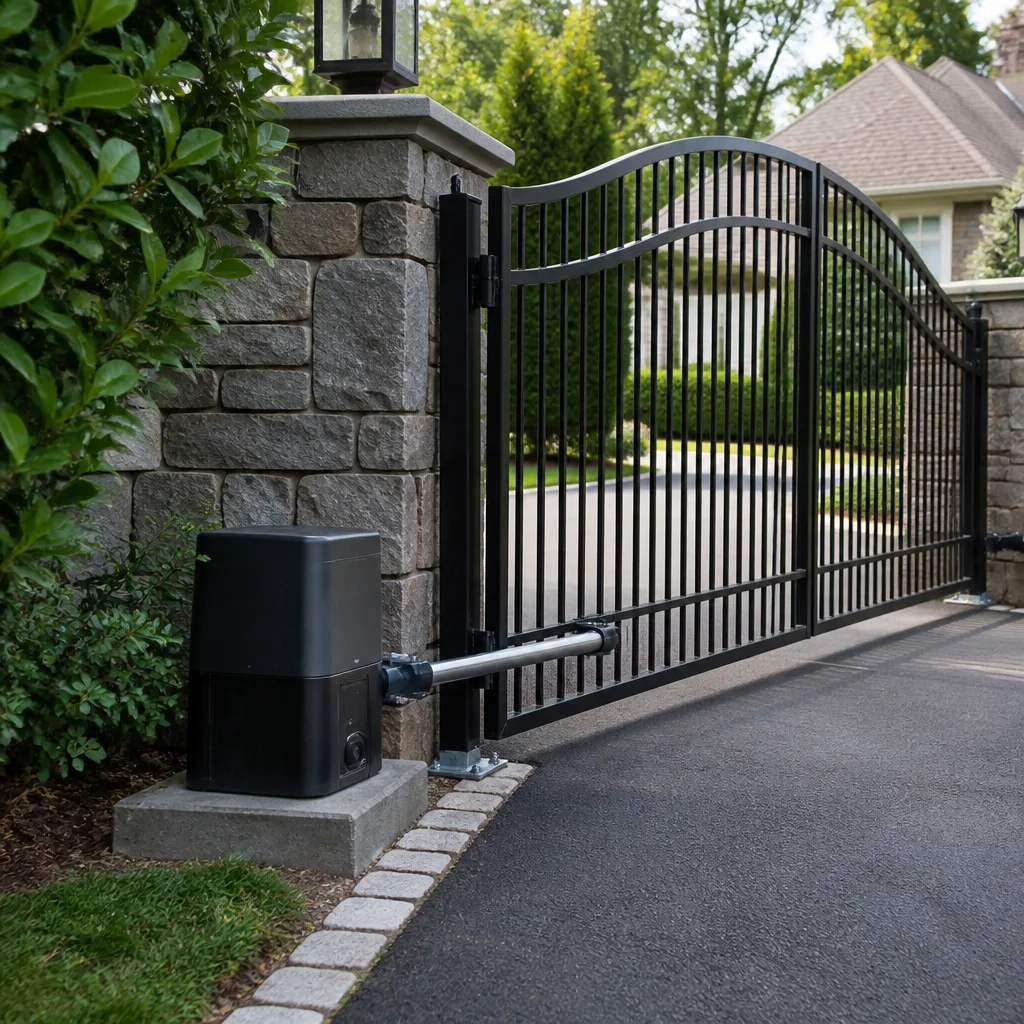
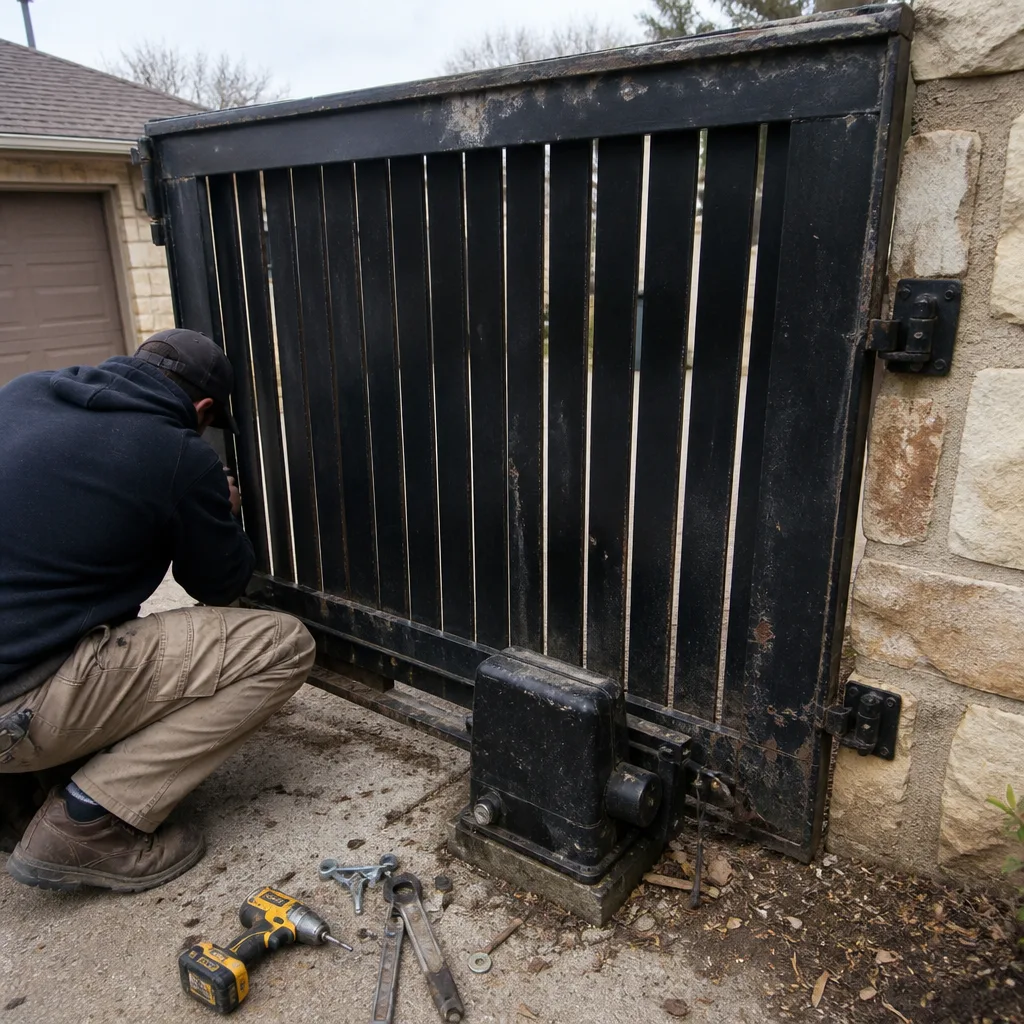 Before
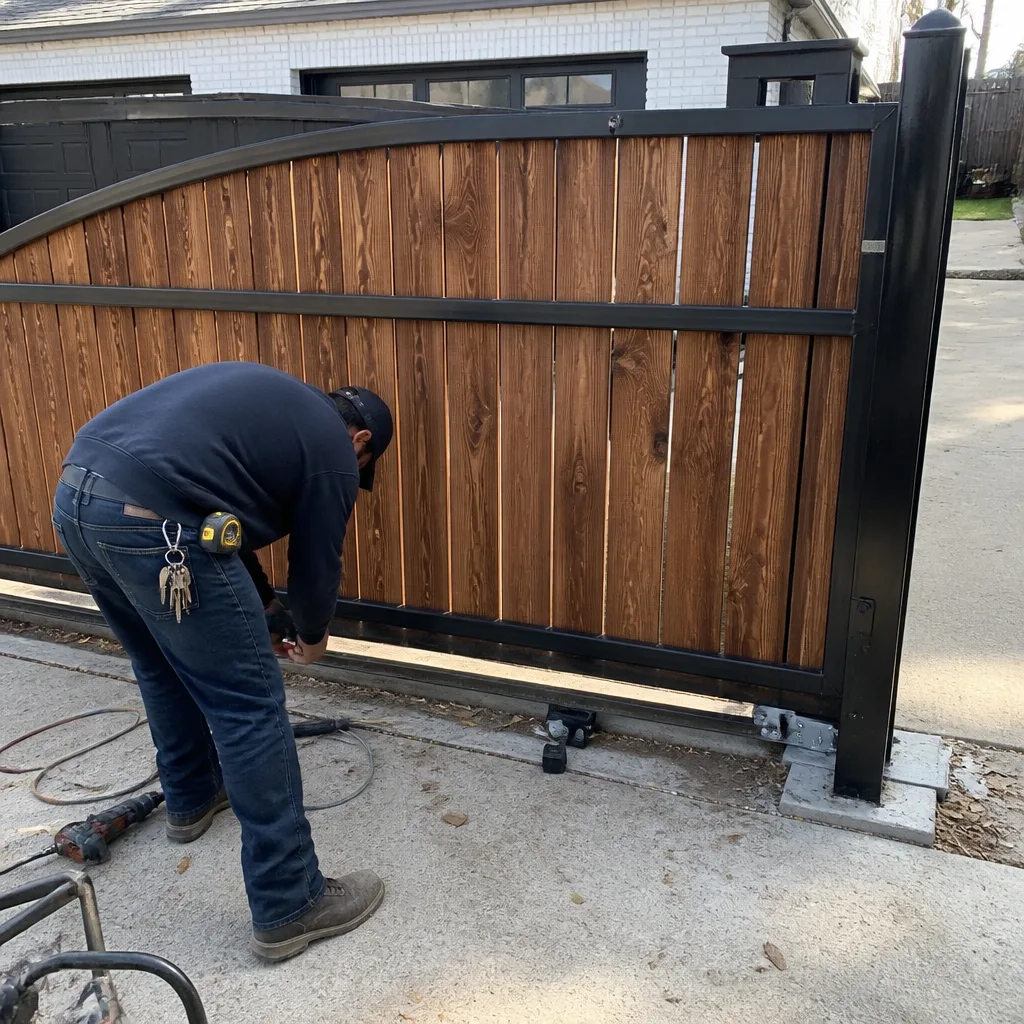 After
After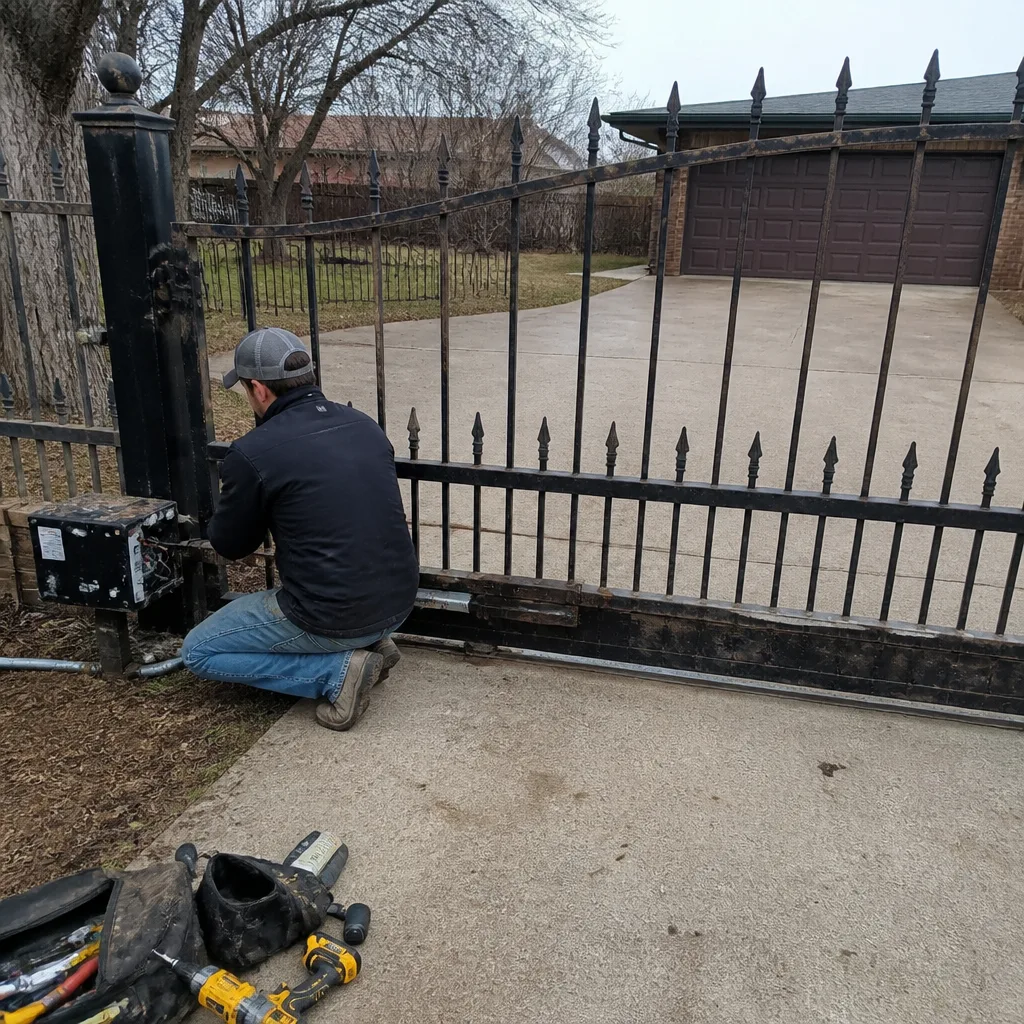 Before
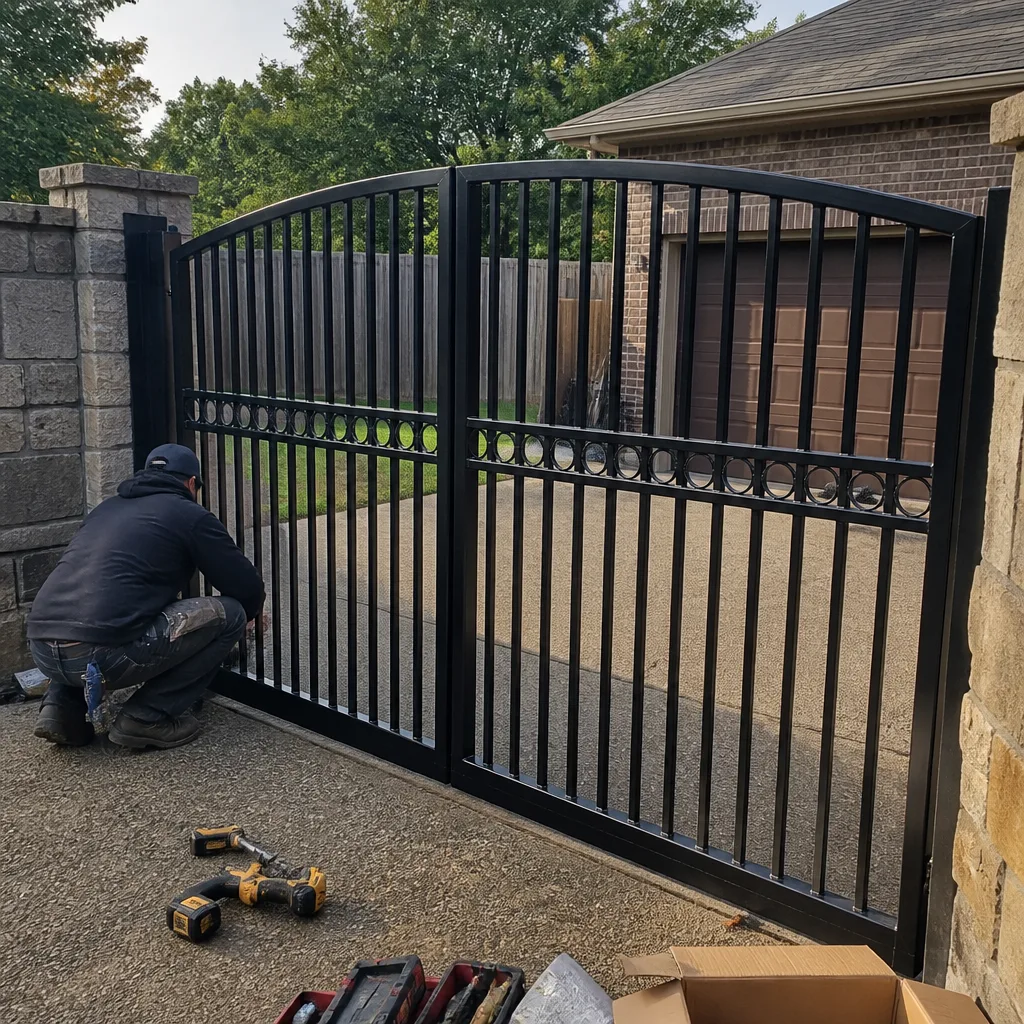 After
After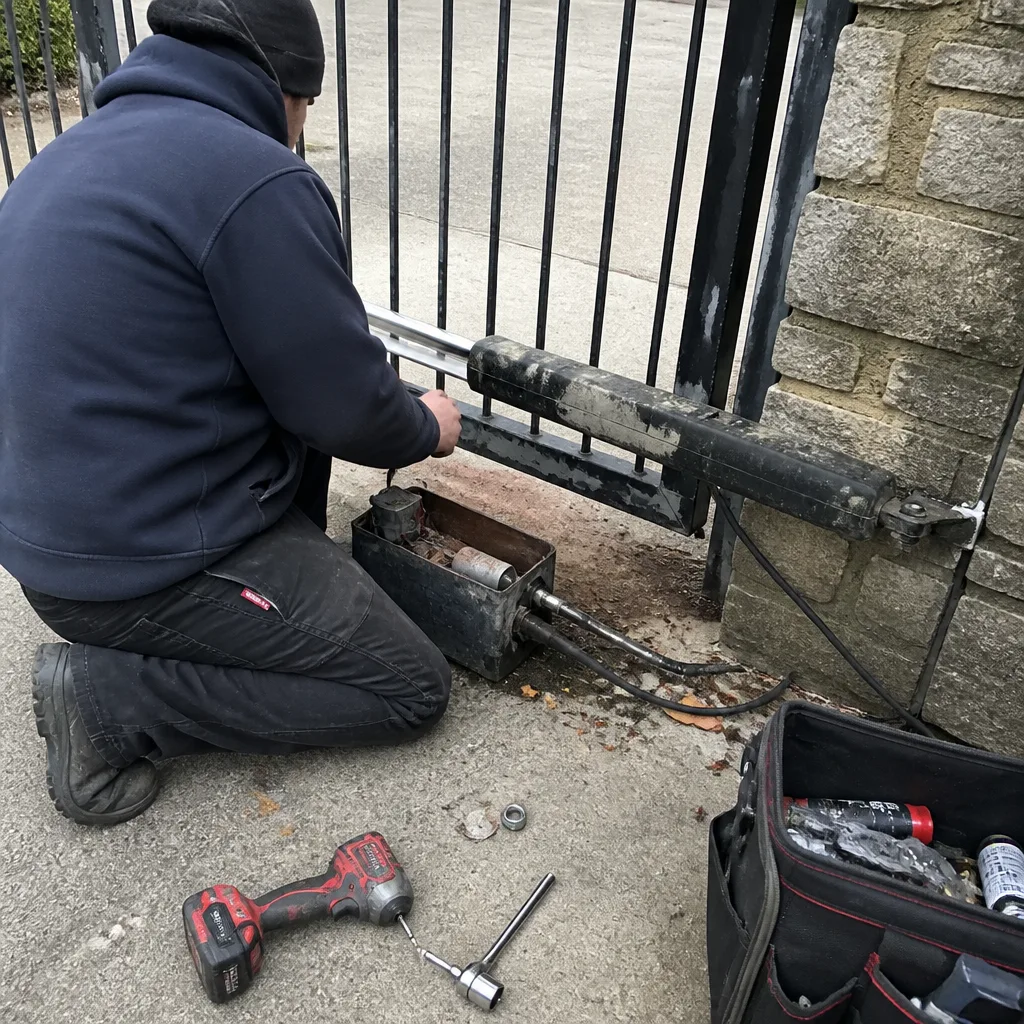 Before
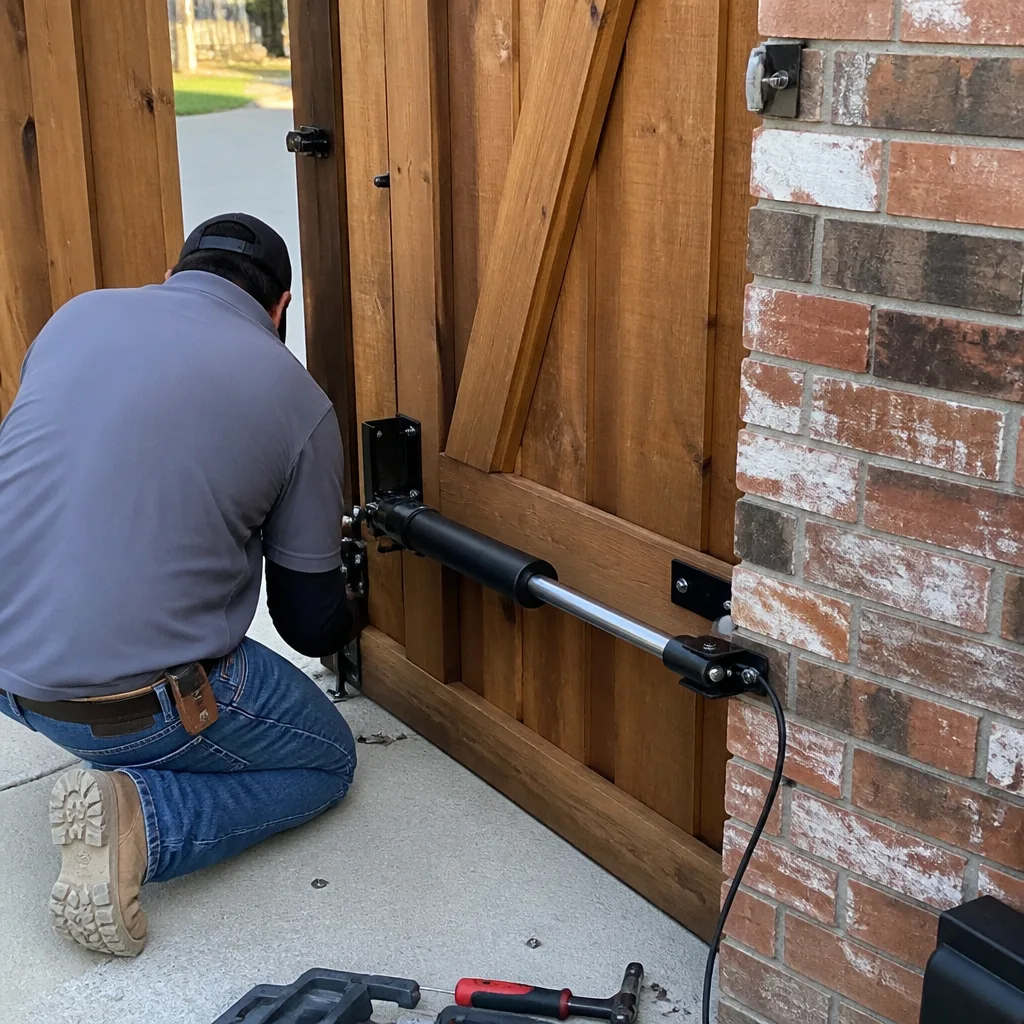 After
AfterThe Complete Guide to Gate Repair in North Richland Hills
North Richland Hills sits on expansive clay soil that can move a post anchor an inch or more in a single wet season, and almost no repair guide mentions that, which is why so many “fixed” gates fail again within six months. Most gate problems here trace back to three root causes: foundation shift, cheap hardware, and deferred lubrication. Understanding those roots is the difference between a $150 fix and a $1,500 replacement. This guide walks you through every common failure mode specific to this area so you can talk to any contractor, or Hal, like you actually know what’s going on, and you can find more guides & resources on our blog.
Quick Answer
Gate repair in North Richland Hills typically runs $150 to $450 for common fixes like hinge replacement, post correction, motor adjustment, or weld repair, while full replacement can exceed $1,500. Most failures in this area stem from clay soil movement stressing post footings and frame welds, cheap builder-grade hardware corroding in our humidity, and lack of lubrication causing motors to burn out prematurely. A repair-first approach fixes the gate in your driveway for a fraction of replacement cost, and our Gate Repair services have done exactly that since 2001.
Table of Contents
- Why Gates Fail in North Richland Hills
- How Gate Types Fail Differently
- The Repair Hierarchy: Adjust, Weld, Replace
- How to Read a Gate Repair Estimate
- What a Legitimate 90-Day Warranty Covers
- Common Mistakes to Avoid
- When to Call a Professional
- Frequently Asked Questions
Why Gates Fail in North Richland Hills
North Richland Hills has a soil problem that most national repair guides will never mention. The clay under our homes, particularly in older neighborhoods off Rufe Snow Drive and neighborhoods east of Davis Boulevard, expands when wet and contracts when dry. That movement doesn’t just crack driveways; it shifts post footings. A gate post that was perfectly plumb when installed in June can be leaning half an inch by September. When the post moves, the gate leaves it behind. The hinges bind, the latch stops lining up, and the motor burns out trying to push a gate that’s fighting its own frame.
We see this pattern every year in North Richland Hills. A homeowner notices the gate dragging on the concrete or the latch doesn’t seat anymore. They call somebody who replaces the latch or adjusts the hinges, and six months later the same problem comes back. The truth is the post moved, and nothing you do to the hardware will fix it until the post is corrected. Hal Gatewood’s first step on most service calls in this area is to put a level on the post before touching a hinge. If the post says the ground moved, the fix starts there, not at the latch.
The second factor most guides miss is our humidity. North Richland Hills gets enough moisture, even in drought years, to corrode cheap zinc-plated hinges and rollers within three to five years. Builder-grade gate hardware is often the cheapest thing the original installer could find. It looks fine on day one and turns to rust powder by year four. We replace more hinge pins and roller wheels in July and August, when the heat makes brittle metal fail, than any other time of year.
The third root cause is the one nobody admits to: deferred lubrication. A gate motor is a machine with moving parts. Those parts need grease. When a bearing on a Ghost Controls or Mighty Mule opener goes dry, the motor has to work harder to overcome friction. Working harder generates heat. Heat shortens motor life. We’ve opened swing gate motors in North Richland Hills that were full of dust and bone-dry grease, and the homeowner said, “It just stopped working one day.” It didn’t just stop. It was tired. It had been working against dry bearings for a year.
We’ve been fixing gates in North Richland Hills since 2001, and most of what we see boils down to those three things: the ground moved, the hardware was cheap, or the lube got skipped. Fix those three and the gate goes back to working like it should. Skip any one of them and you’ll be calling us again next season.
How Gate Types Fail Differently
Not all gates fail the same way, and knowing the difference can save you money. A swing gate, a slide gate, and an overhead gate each have a specific failure profile in North Richland Hills. Recognizing the early signs means you call before the gate tears itself apart.
Swing Gates
Swing gates are the most common residential gate type in North Richland Hills, and their failure usually starts at the hinge post. When clay soil shifts, the hinge post tilts. The gate, which was balanced to swing freely, now has to fight gravity. You’ll notice the gate starts to sag on the latch side, or it scrapes the concrete when it opens. The hinges themselves also bear the weight. On a standard six-foot steel swing gate, that’s anywhere from 150 to 300 pounds hanging on two or three hinge pins. When those pins wear, the gate drops. A gate sags in the hinge post, not in the middle, and that is where we start.
Motor failure on swing gates often comes from limit switches that have drifted. The motor thinks the gate is closed when it’s not, so it keeps pressing. That burns out the capacitor and eventually the motor itself. We see this a lot on older DoorKing and Elite swing openers across North Richland Hills. The fix is often a limit switch adjustment and a fresh capacitor, not a whole new operator. But many contractors will quote the replacement because the adjustment takes longer to explain than to quote.
Slide Gates
Slide gates are prevalent on larger properties in the Hill-adjacent parts of North Richland Hills and on commercial lots. Their weak point is the track and rollers. In our clay soil environment, the track settles unevenly. One section dips, another rises, and the gate now rolls like a shopping cart with a bad wheel. You’ll hear it before you see it: a grinding or rumbling sound as the gate moves. That’s the rollers fighting the track. Left alone, the roller brackets bend, the chain pulls unevenly, and the motor strains until it trips.
We fixed a slide gate off Glenview Drive last spring where the track had settled a full inch at one end. The homeowner had been quoted a complete replacement by another company. Hal leveled the track, replaced two roller wheels, and charged less than a quarter of that quote. The gate is still running fine. Show me the gate closing on its own and I’ll show you where it’s failing. On slide gates, it’s almost always the track.
Overhead Gates
Overhead gates are less common in residential North Richland Hills but they show up on shop garages and some estate properties. Their failure profile is different again. The torsion springs, which counterbalance the gate panel, have a finite lifecycle measured in cycles. When a spring breaks, the gate becomes dangerously heavy. An overhead gate with a broken spring can weigh over 300 pounds of dead weight. This is one of the few gate problems where the safety risk is genuinely serious. High-tension springs store enough energy to cause severe injury. If you hear a loud bang from the garage and the gate won’t lift, that’s a broken spring, and it’s time to stop touching it and call a professional.
Overhead gate motor failure often follows the spring. A motor that’s been working against a weak or broken spring burns out fast. The repair order matters here: fix the spring first, then assess the motor. A surprising number of people replace the motor first and then discover the spring was the problem all along.
The Repair Hierarchy: Adjust, Weld, Replace
There’s a right order to gate repair, and it’s not the order that makes contractors the most money. The correct sequence is adjust first, weld second, replace only as a last resort. That order saves money, and it’s how we’ve worked for 29 years.
Here’s the hierarchy, step by step:
- Adjust: Before buying anything, check what’s out of alignment. Limit switches, hinge tension, latch position, track level. Many repair calls are solved with a wrench and ten minutes of adjustment. We’ve corrected “broken” openers in North Richland Hills that only needed a limit switch dialed one notch.
- Lubricate: Clean and grease the moving parts. Hinges, rollers, chain drives, pivot bearings. This one step extends motor life more than any product sold in a box store. We see gates every month that just need grease.
- Tighten: Walk the hardware. Bolts loosen over time, especially on gates that cycle multiple times a day. A loose bolt is a slow break. Tighten everything before you call it done.
- Weld: If a bracket has cracked, a weld repair on site is usually faster and cheaper than ordering a replacement part. We weld in your driveway, so the gate never leaves. The fix is done the same day, not three weeks later when a part ships.
- Replace individual parts: Only after adjustment and welding fail do you replace the failed component: hinge, roller, capacitor, chain, board. And you replace only the part that failed, not the assembly around it.
- Replace the gate or operator: This is the final option. When the frame is structurally compromised, when the gate panel has rusted through, or when the motor is truly dead, replacement is the honest call. We will tell you if that’s the case. We will also show you the failed part so you can see it with your own eyes.
Here’s why the order matters. Every time you skip a step, you spend money on a part that didn’t need replacing. We once looked at a swing gate in North Richland Hills that a previous contractor had replaced entirely. The original problem was a $20 hinge pin. The gate was fine. The post was fine. The pin had just worn through. The homeowner paid $2,400 for a gate they didn’t need. We don’t do that. The name is on the shop, and the shop is down the road. That is the oldest accountability there is.
How to Read a Gate Repair Estimate
A gate repair estimate tells you a lot about the person who wrote it. A good one is itemized, specific, and easy to match against the actual gate. A bad one is vague and padded. Here’s how to read one line by line so you know if you’re being upsold a replacement you don’t need.
Step 1: Look for the diagnosis first
An estimate should begin by stating the problem. If the first line is a part number or a price, that’s backwards. The contractor should tell you what’s wrong before telling you what it costs. “Hinge pin worn, causing gate to drop 1.5 inches on latch side” is a diagnosis. “Replace hinge assembly” is a guess. Ask for the diagnosis in writing.
Step 2: Separate parts from labor
A legitimate estimate separates parts and labor. If everything is lumped into one number, you cannot compare it to anything else. You also cannot tell what you are paying for. We itemize every job. You should see exactly what part is being replaced and what the labor time is. That’s not a gimmick. That’s the invoice.
Step 3: Check for redundant parts
This is the most common upsell in the gate industry. You need a hinge pin, and the estimate includes a full hinge set, a new latch, and a motor service. Not all of those are necessary. A contractor who wants to replace the whole assembly when one part failed is not doing you a favor. Ask why each line item is there. If the answer is “while we’re in there,” it’s probably padding. Fix the panel without the post and you’ll fix it twice. Replace parts that don’t need replacing and you’ll pay for them twice.
Step 4: Look for the hidden trip charge
Some companies quote a low service fee and then tack on a $80 trip charge at the end. Our policy is different: no trip charge inside the county. The price we quote is the price you pay, and it’s agreed before any work starts. If an estimate doesn’t spell out the trip charge, ask. In North Richland Hills, you should never pay a surprise fee just for the truck showing up.
Step 5: Check for the warranty line
A written estimate should include the warranty. If it doesn’t, ask what’s covered and for how long. Most contractors offer nothing beyond the manufacturer’s part warranty. Our 90-Day Done Right Promise is stamped on every job: if it’s not done right, we make it right. The estimate should say something concrete, not “guaranteed to work.” That phrase means nothing. A real warranty has a timeframe and a clear standard.
What a Legitimate 90-Day Warranty Covers
Most gate repair warranties are written carefully to exclude everything that could actually go wrong. A legitimate one is short and clear. Here’s what a real 90-day repair warranty should cover, and what most contractors quietly exclude.
What should be covered:
- Labor on the repaired component: If the same part fails within the warranty period, the labor to fix it should be free. Not discounted. Free.
- Parts installed by the contractor: If a hinge or roller we installed fails in 90 days, we replace it. No charge, no argument.
- Adjustment of the same issue: If the gate starts sagging again at the same spot, the adjustment is covered. This is where most warranties fall apart. They cover the part but not the follow-up.
- Response within a reasonable window: A warranty is useless if it takes two weeks to honor it. We prioritize warranty callbacks because the 90-Day Done Right Promise means exactly what it says.
What most contractors quietly exclude:
- Anything caused by “soil movement.” This is the classic exclusion in the DFW area. The warranty covers the part, but if the ground shifted, that’s “not their fault.” In North Richland Hills, the ground always shifts. That’s not an exclusion, that’s the job. A post repair should account for our clay soil, not dodge it.
- Gate panels that were already in poor condition. Fair enough, but a good warranty states this upfront, not after the panel cracks.
- Motor failure if the gate was “improperly maintained.” This is the blank check exclusion. What does “improperly maintained” mean? Nobody ever defines it. A real warranty should say what maintenance is required, not reserve the right to void the claim later.
- Anything cosmetic. Some warranties cover the function but not the appearance. If the repair leaves the gate looking worse, that’s not a successful repair.
- Hardware not purchased from the contractor. Read the fine print. If the warranty only covers parts they sold at full markup, that’s a sales tactic, not a guarantee.
We write our warranty in plain English because we intend to honor it. Hal’s name is on every invoice. The 90-Day Done Right Promise means if it’s not done right, we make it right. One call brings him back, no runaround. That’s the whole warranty.
Common Mistakes to Avoid
- Lubricating a dry bearing without cleaning it first. Adding fresh grease to a dirty bearing just presses grit deeper. Clean first, then grease. Skipping this step is the most common “maintenance” mistake we see in North Richland Hills.
- Replacing the motor before checking the power supply. A lot of “dead” openers are just a tripped GFCI or a bad outlet. Before you spend $400 on a new motor, plug something else into that outlet. We’ve saved people money with that one question.
- Welding a broken bracket without correcting the post. The weld will hold, but the post is still leaning, so the force that broke the bracket is still there. It breaks again. Fix the cause, not just the crack.
- Buying the cheapest opener on sale at a box store. Gate openers are not interchangeable the way lightbulbs are. A cheap operator on a heavy gate will fail fast. Match the motor to the gate. We service nine major brands: LiftMaster, FAAC, BFT, Linear, Viking, Ghost Controls, DoorKing, Elite, and Mighty Mule. We know which one fits which gate.
- Ignoring a gate that’s rubbing or scraping for months. The rubbing is doing damage every single day. What was a hinge adjustment in March becomes a bent post and a burned motor by August. Call early. The fix is smaller.
- Trying to adjust overhead gate springs without proper tools and training. Those springs hold enormous tension. A mistake can cause severe injury. This is not a YouTube job. Call someone who does it every day.
- Paying a deposit before the work starts to a company you can’t verify. Never pay full price upfront for a gate repair. A local, accountable company with a published address doesn’t need a big deposit to “hold your spot.” Hal’s shop is in North Richland Hills, and his license number is published for anyone to look up. That’s the kind of accountability that should come standard.
When to Call a Professional
Some gate problems are worth fixing yourself, as we cover in DIY vs Professional Gate Repair: The North Richland Hills Homeowner’s Decision Guide. A loose latch screw, a squeaky hinge that just needs oil, a low battery in a keypad, those are homeowner jobs. But you should call a professional when the gate is too heavy to lift, when the post is visibly leaning, when the motor hums but won’t move the gate, or when anything involves electricity, torsion springs, or structural metal. If the gate clunks, drops on one side, reverses mid-cycle, or throws the breaker, stop using it and call. A gate that closes on its own is a gate that has already failed somewhere. You just haven’t found the break yet. Gatewood Fence & Gate offers free estimates in North Richland Hills, call (817) 241-4067 and a live person answers every time, 24 hours a day.
Frequently Asked Questions
Gate repair in North Richland Hills typically costs $150 to $450 for common repairs like hinge replacement, post leveling, limit switch adjustment, or roller replacement. More involved work like motor board replacement or weld repair on a structural member can run $500 to $800. Full gate replacement usually starts around $1,200 and goes up from there. We quote every price before work starts, no surprises, and we offer $40 off any repair over $200. Call (817) 241-4067 for an exact quote on your gate.
Yes, most common repairs we handle the same day in North Richland Hills. Hinge replacements, latch adjustments, limit switch resets, and on-site welding are everyday jobs for us. We stock parts on the truck for the gate brands we service, so we don’t have to order and come back a week later. If you need a gate repair today, call (817) 241-4067 and Hal will tell you when he can be there, usually within the day.
A gate sags when the hinge post has moved or the hinge pins have worn, and in North Richland Hills, the most common cause is clay soil shifting the hinge post out of plumb. The post drifts, the hinges bind, and the gate drops on the latch side. The fix starts at the hinge post, not the middle of the gate. A gate sags in the hinge post, not in the middle, and that is where we start.
We service nine major gate opener brands: LiftMaster, FAAC, BFT, Linear, Viking, Ghost Controls, DoorKing, Elite, and Mighty Mule. If your opener is one of these, we can diagnose it, repair it, and have parts for it. If it’s a brand we don’t recognize, we’ll tell you that honestly before scheduling the appointment. Call (817) 241-4067 and tell us what opener you have, and we’ll let you know exactly what we can do.
Repair is almost always cheaper, and in our experience in North Richland Hills, most gates are repairable well past the point that other contractors want to replace them. A steel gate frame can last 25 years or more if the hinges stay aligned and the welds stay solid. Replacement only makes sense when the frame has rusted through or the post is structurally unsalvageable. We’ll show you the failed part and let you decide with eyes on it. If we tell you it’s repairable, that means we can fix it, not that we’d rather upsell you.
Look for a published local address, a license number you can verify, a real person whose name is on the company, and a warranty that’s specific and written. Ask if they weld on site or haul the gate away. Ask if they charge a trip fee. Ask who answers the phone at midnight. Gatewood Fence & Gate has been owner-operated since 2001, with a live person answering every call 24/7, and the 90-Day Done Right Promise on every job. If you’ve already got a written estimate from someone else, bring it to us, the second opinion is free. Call (817) 241-4067.
The Bottom Line
Gate repair in North Richland Hills is not complicated once you understand the ground we’re standing on. The clay moves, the post follows, the hardware fights it, and the gate fails. Fix the post before the panel. Lubricate before you replace. Adjust before you weld, weld before you replace, and replace only the part that failed. A good estimate is itemized, a good warranty is specific, and a good contractor is one you can look in the eye at the grocery store. We’ve been that contractor in North Richland Hills since 2001. The name is on the shop, and the shop is down the road. That’s the oldest accountability there is.
If your gate is acting up, call (817) 241-4067. A live person answers. We’ll give you a straight answer, a free estimate, and a repair that’s done right. That’s the whole promise.
Written by Hal Gatewood, Owner at Gatewood Fence & Gate, serving North Richland Hills since 2001.