
Last updated August 26, 2026
Free on-site gate assessment - hinges, posts, and your LiftMaster or Nice gate operator checked before anything is quoted
The assessment is free and the quote is the invoice.
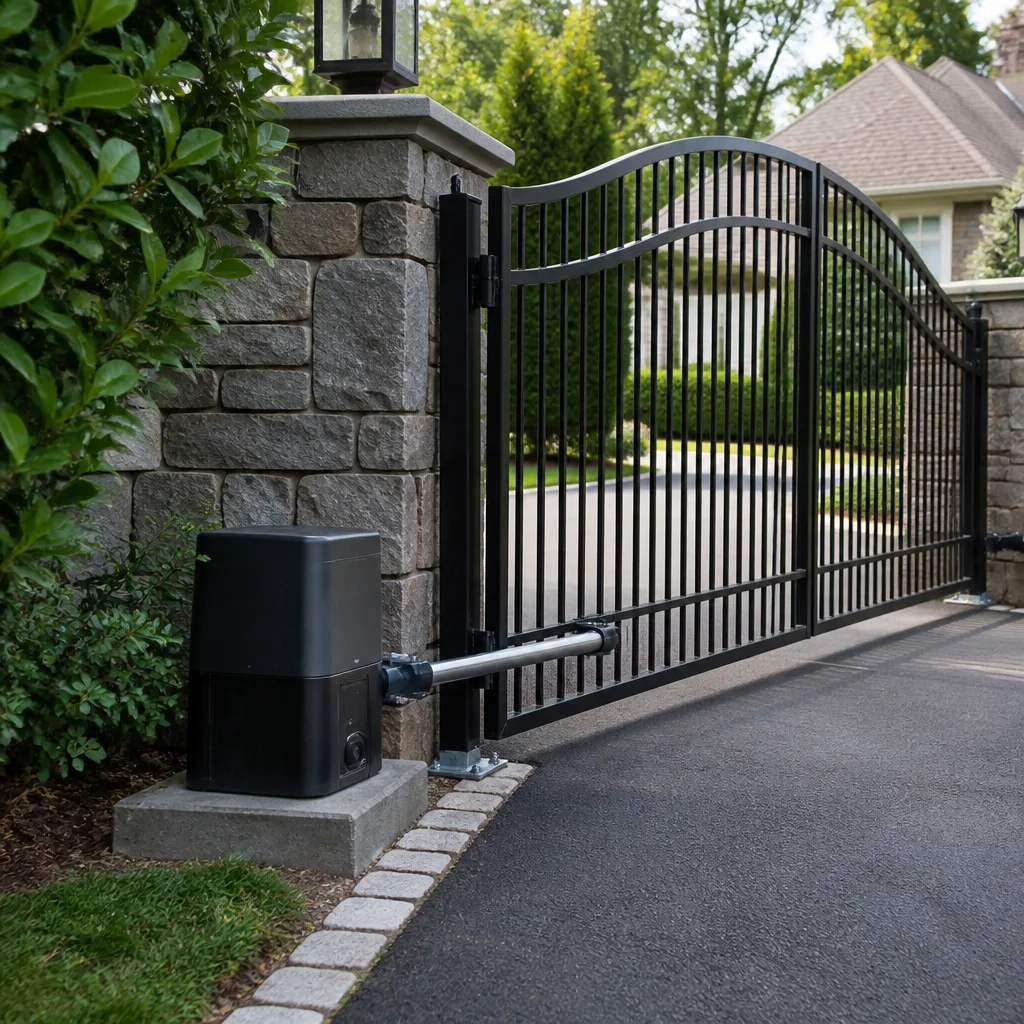
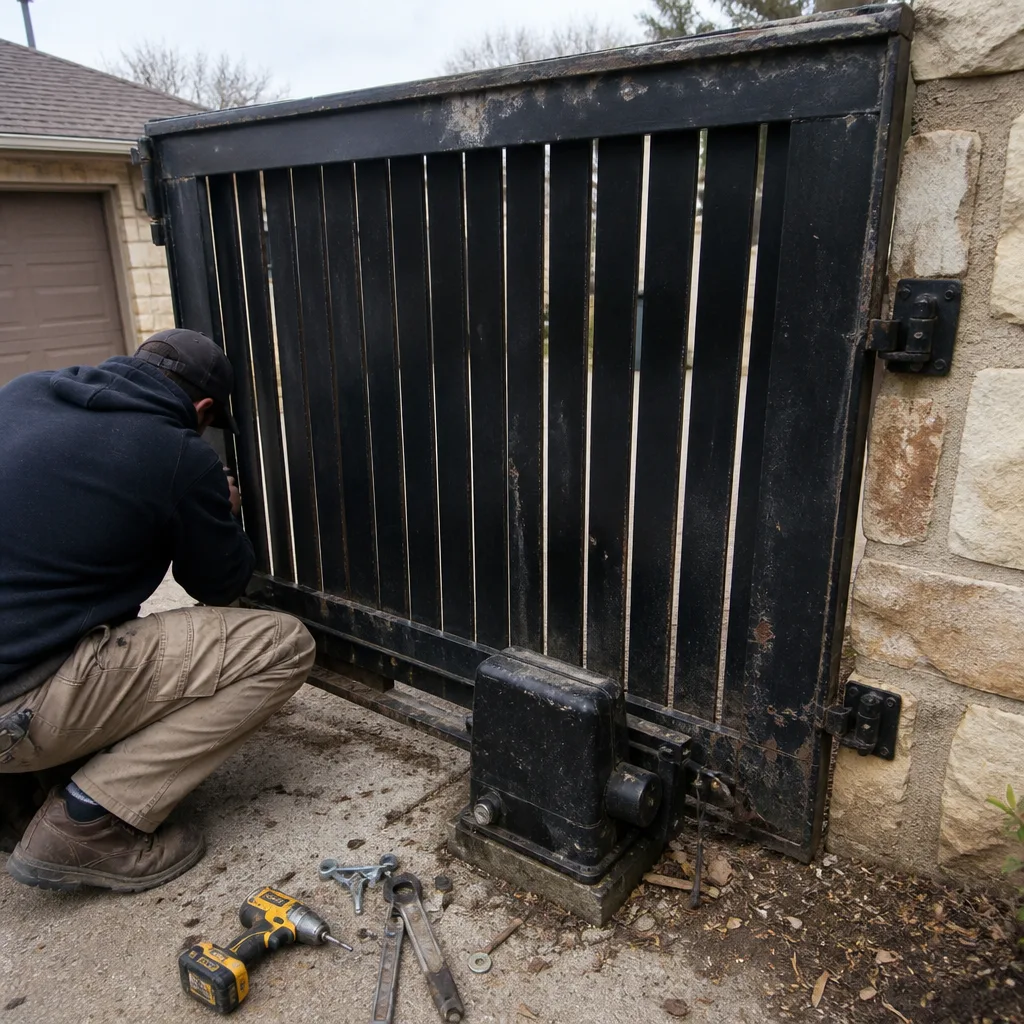 Before
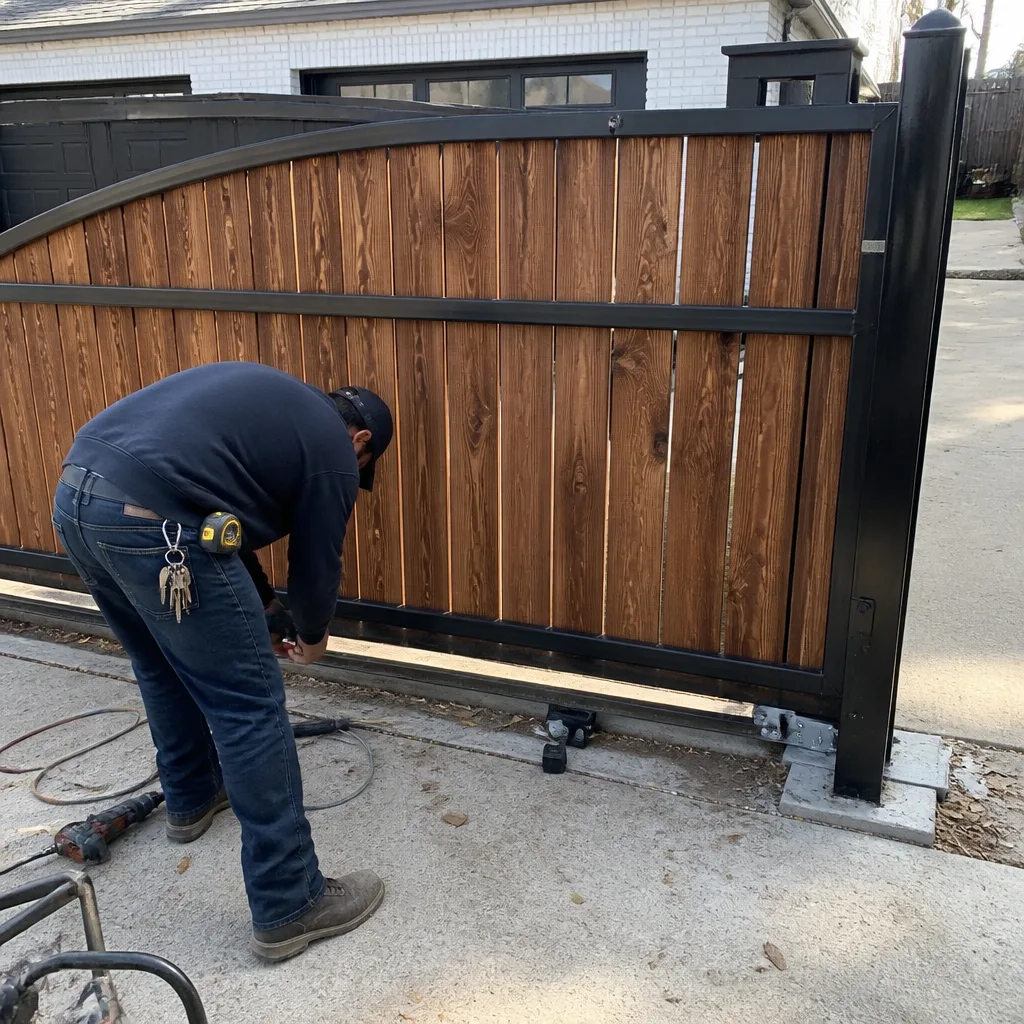 After
After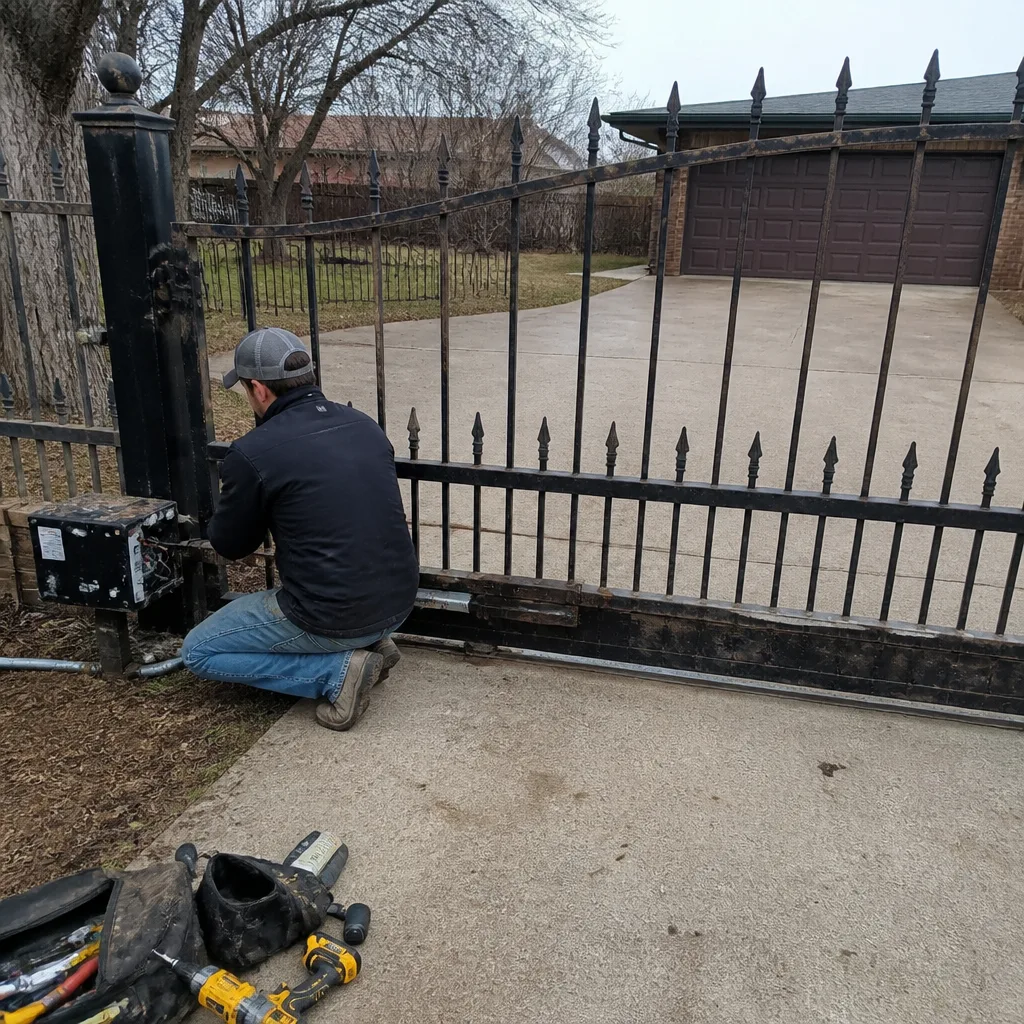 Before
 After
After Before
 After
AfterGate Repair Permits, Codes & Inspections in TX: What You Need to Know
A North Richland Hills homeowner added a solar-powered operator to her driveway gate without an electrical permit. Three years later, her home inspector flagged it as unpermitted electrical work, and it held up her closing for two weeks. The permit would have cost $75 and taken one afternoon. That’s the thing about gate work in Texas: most repairs never get near a permit counter, but the ones that do are never the ones you want to discover at the worst possible moment.
This guide draws the line between gate repairs you can do tomorrow and gate work that requires a permit, an inspection, or at minimum a conversation with your city or HOA. We’ll cover what Tarrant County and North Richland Hills actually enforce, how gate operator wiring is classified under Texas electrical code, what “like-for-like replacement” really means, and what paperwork you should keep in a drawer for the day you sell.
Quick Answer
Most residential gate repairs in Texas don’t require a permit. You can replace hinges, repair a sagging panel, swap a gate opener circuit board, or weld a cracked frame rail without pulling anything. Permits become necessary when you change the gate’s height or footprint, install new line-voltage electrical wiring for an operator, or replace structural posts. The dividing line is simple: cosmetic and mechanical repairs are exempt, structural and electrical changes are not. When in doubt, call the City of North Richland Hills Building Inspections department and ask before you dig, wire, or pour.
Table of Contents
- What Gate Repairs Are Exempt From Permits in Texas
- What Triggers a Permit in North Richland Hills and Tarrant County
- Gate Operator Wiring: Low-Voltage vs Line-Voltage and Why It Matters
- What “Like-for-Like Replacement” Actually Means Under Texas Code
- HOA Gate Rules vs City Code: Who Has Final Say
- How to Verify Work Was Done to Code When No Permit Was Required
- The Paperwork You Keep for Resale
- Common Mistakes to Avoid
- When to Call a Professional
- Frequently Asked Questions
What Gate Repairs Are Exempt From Permits in Texas
Texas residential code, as adopted by most municipalities including North Richland Hills, exempts a long list of routine maintenance and repair work from permit requirements. The logic is straightforward: if the work restores something to its original condition without changing its structure, footprint, or energy load, the state doesn’t want to slow you down with paperwork. Here’s what’s explicitly exempt for residential gate repair.
Repairs that don’t require a permit:
- Replacing gate hinges, brackets, or rollers on an existing gate frame
- Welding a cracked frame rail or reinforcing a weak joint on site
- Re-adjusting a sagging gate by tightening or shimming existing hinge hardware
- Replacing a gate latch, lock, or drop rod
- Swapping a gate opener control board, remote receiver, or photo-eye sensor
- Replacing a damaged gate picket or infill panel on an existing frame
- Lubricating and servicing an existing gate opener, track, or chain drive
- Replacing a gate opener battery or solar panel on an existing low-voltage system
In our experience, this covers about 85 percent of the calls we run in North Richland Hills and across Tarrant County. The broken hinge, the operator that stopped responding, the gate that drags on the concrete, the frame that cracked at the weld: none of these require a permit of any kind. You fix them and you move on with your day.
What this exemption does not cover is any change to the gate’s size, any new concrete footings, any structural post replacement, or any new electrical run that isn’t a direct like-for-like swap. Those are the situations where the city wants to know what you’re doing before you do it.
What Triggers a Permit in North Richland Hills and Tarrant County
North Richland Hills follows the 2021 International Residential Code with local amendments, and the permit triggers are consistent with what you’ll find in most Tarrant County cities. The city’s residential permit threshold applies to four types of gate work. If any of these describe your project, you need to pull a permit or verify with the Building Inspections department that your specific scope is exempt.
The four gate work items that trigger a permit in North Richland Hills:
- Changing the gate height. If your new gate stands taller than the one it replaces, or if you’re adding a full privacy insert that changes the gate’s wind load characteristics, the city treats it as new construction. This matters because taller, more solid gates catch more wind and place more stress on posts, hinges, and operators.
- Replacing or resetting structural gate posts. Pulling an old hinge post, digging a deeper hole, pouring new concrete with a new diameter, and setting a new post is structural work. This triggers a permit because a failed post is a falling gate waiting to happen, especially on a sloped driveway or near a sidewalk.
- New line-voltage electrical work. Running a dedicated 120-volt circuit from your panel to a gate operator location requires an electrical permit. This includes trenching conduit, setting a junction box, and making the final connection to the operator.
- Installing a new gate where none existed. This is new construction, not repair. It requires the same review as any new accessory structure: setback verification, property line clearance, and a check of easements.
North Richland Hills specifically is a city that’s straightforward about this. Their permit fee structure for residential accessory and repair work runs from roughly $50 for a simple trade permit to a few hundred dollars for a project that requires plan review. The city’s website has a permit guide that asks basic questions about scope, and their inspectors will tell you over the phone whether your job needs a permit. We’ve called them plenty of times on our customers’ behalf. They answer the phone, which is more than I can say for a lot of cities.
The inspection piece matters too. If you do pull a permit for gate work in North Richland Hills, expect one inspection for the structural or footing work and, if electrical is involved, one rough-in inspection and one final. Inspections are scheduled by phone or online. The process is fast when the work is done right the first time.
Gate Operator Wiring: Low-Voltage vs Line-Voltage and Why It Matters
Here’s the single most misunderstood part of gate repair permits in Texas: the difference between low-voltage and line-voltage electrical work. Most homeowners don’t know the distinction, and honestly, a lot of handymen don’t either. Understanding it will tell you whether your gate operator installation needs an electrical permit or not.
Low-voltage systems run on direct current, typically 12 or 24 volts, supplied by a transformer that plugs into a standard outdoor outlet or by a solar panel and battery. The transformer steps your household 120-volt current down to something that can’t hurt you. Operators that run on low-voltage power include models from brands like Ghost Controls, Linear, and Mighty Mule, especially the solar-compatible lines. Under Texas electrical code, low-voltage wiring is largely exempt from permit requirements because the potential for fire or shock is minimal. If your gate operator plugs into an existing outlet or runs on a solar panel, you don’t need an electrical permit for the operator itself.
Line-voltage systems run directly on 120 or 240 volts AC and require a dedicated circuit from your electrical panel to the operator location. These are the heavier-duty operators, including many Viking and DoorKing models designed for larger, heavier gates and for gates that cycle many times per day. The rule is simple: if a new circuit must be pulled from the panel, or if a new conduit must be trenched to the gate, an electrical permit is required. Period. Not because the operator is dangerous, but because the wiring path is now part of your home’s electrical system, and the city wants an inspector to confirm it meets code for depth, conduit type, and connection quality.
Here’s the nuance that trips people up: a low-voltage operator might still trigger an electrical permit if you need a new 120-volt outlet installed at the gate to power the transformer. The operator is low-voltage, but the outlet is line-voltage. Likewise, a solar operator with no house power connection at all is about as permit-free as gate work gets, which is why the homeowner in our opening story thought she was in the clear. Her mistake wasn’t the solar operator itself. It was the new outlet her installer added to power the battery back-up on cloudy weeks. That one outlet, unpermitted, is what her home inspector flagged three years later.
What “Like-for-Like Replacement” Actually Means Under Texas Code
The phrase “like-for-like replacement” is the most protective language in Texas residential code for gate work, and it’s also the most frequently misunderstood. People assume like-for-like means “similar size, similar shape.” It means something more specific, and the distinction is exactly where homeowners get in trouble with title companies and home inspectors.
Under Texas code, like-for-like replacement means replacing a component with a new component of the same size, type, and function, in the same location, without modifying the surrounding structure or the connected systems. For a gate repair, that means:
- Replacing a gate opener that died with a new opener of the same voltage and similar power rating, using the same electrical connection point
- Replacing a hinge post anchor bolt with a new bolt of the same diameter and grade
- Replacing a gate wheel with one of the same size and load rating, in the same mounting position
- Replacing a gate lock with a new lock of the same backset and mounting pattern
What like-for-like does NOT protect is any change that alters the structural or electrical character of the gate. Replacing a 12-volt opener with a heavy-duty 120-volt opener and running new wire is not like-for-like. Pulling a bent steel post and setting a larger-diameter post in a deeper footing is not like-for-like, no matter how identical the new post looks from the street. Redesigning the gate from a picket style with air gaps to a solid privacy style that catches three times more wind is not like-for-like.
The reason this matters for resale is that home inspectors and title reviewers look for exactly these changes. They compare the permit history on file with the visible condition of the property. If the gate clearly changed from its original built condition, and no permit appears in the city record, they flag it. The buyer’s lender can then pause the closing until the situation is resolved. In North Richland Hills, that resolution usually means pulling a permit retroactively, scheduling an inspection, and paying the fees, which often run double for after-the-fact permits. It’s not a disaster, but it’s a wholly avoidable delay at the worst time.
HOA Gate Rules vs City Code: Who Has Final Say
North Richland Hills has a patchwork of homeowner associations, especially in the newer neighborhoods east of Davis Boulevard and around Liberty Park. If your property sits in an HOA, you have two sets of rules to satisfy: the city’s building code and the HOA’s architectural guidelines. Here’s the ordering that matters.
City code sets the minimum standard for safety and legality. The city cares about structural integrity, electrical safety, setback compliance, and permit history. City code is applied uniformly and doesn’t care what color your gate is.
HOA rules set the aesthetic and use standards. The HOA cares about design consistency, gate height, material type, color palette, and sometimes even whether a driveway gate can be solid or must be open-picket. HOAs have no authority over electrical code compliance and cannot require permits, but they can require design review approval before you install a new gate or modify an existing one in a way that changes its appearance.
When city code and HOA rules conflict, the stricter standard applies. If your HOA says the gate can be no taller than 6 feet, and city code would allow 8 feet, your 8-foot gate plan is dead. If the HOA only permits black powder-coated steel gates and you’ve dreamed of a natural cedar gate, you’re fighting a losing battle. However, the HOA cannot require you to do anything that violates city code. An HOA board that demands you install a gate in a location that would violate setback requirements is out of line, and the city’s rules control.
For repairs, the picture is simpler. Most HOAs in North Richland Hills treat repairs differently from modifications. Fixing a broken hinge, replacing a dead opener with the same model, or welding a cracked rail is generally invisible to the HOA because the gate looks the same when you’re done. The moment the repair changes the gate’s appearance, such as replacing a picket panel with a wood infill, or changes the gate’s size, the HOA’s architectural review process applies. If you’re not sure, read your HOA’s governing documents or send an email to the management company. It costs nothing and takes five minutes, and it’s the difference between a clean project and a board letter in your mailbox.
How to Verify Work Was Done to Code When No Permit Was Required
So you replaced your gate opener, swapped out the hinges, and maybe welded a crack in the frame rail. No permit, no inspection, and the gate works. You’re done, right? For the gate’s function, yes. For your own protection at resale, there’s one more step that almost nobody does and everyone should.
When no permit is required, no city inspector will ever check the work. That means the only documentation the work was done correctly is the documentation you create yourself. It’s a simple habit, and it takes ten minutes. Here’s the process we recommend:
- Take before and after photos. Photograph the damaged component before the repair, and the finished repair afterward. Include the gate as a whole so a reviewer can see the work in context. Date-stamp the photos or keep them in a folder with a clear filename.
- Keep the receipt for parts and materials. If the receipt shows the correct replacement part for your operator model, that’s evidence of a like-for-like swap.
- Get a written invoice from whoever did the work, describing the scope. A one-paragraph description that says “replaced existing 24V opener with equivalent model, no new wiring, no structural changes” is gold if anyone ever questions the work.
- Note the brand, model, and voltage of any new operator. If you installed a Linear or Ghost Controls opener, write down the model number and voltage. It appears on the unit itself and on the packaging.
- File it all in one place. A folder called, literally, “gate paperwork,” kept with your other property records. When you sell, hand the folder to the buyer’s agent. It answers the home inspector’s questions before they’re even asked.
None of this is mandated by code, but it’s the single most effective way we know to keep a no-permit repair from becoming a closing-day problem. A home inspector sees a newer-looking gate operator and wonders if the electrical was done legally. Your folder shows the date of replacement, the model number, and the fact that it used the existing low-voltage connector. The question dies on the spot.
The Paperwork You Keep for Resale
Resale is where permit confusion actually costs people money. The gate itself rarely falls apart at closing. What falls apart is the buyer’s confidence when they see a changed gate, a newer operator, or a repair that looks recent, and the seller can’t produce any records. In Texas, title companies are obligated to disclose known unpermitted work, and since 2021, the seller’s disclosure notice specifically asks about any improvements made without required permits. That question is a trap for anyone who installed a line-voltage operator without a permit and forgot about it.
Here’s the complete paperwork kit we recommend every gate-owning homeowner in North Richland Hills keep on file:
- Any permit, inspection report, or certificate of completion from gate or electrical work. If you pulled a permit, keep the final inspection sign-off. It is the cleanest possible evidence.
- The original installation receipt for the gate and operator. If you bought the home with the gate already in place, ask for this at closing. If the seller can’t produce it, make a note of that.
- Replacement part receipts and invoices. Every hinge, every opener board, every welding job. Yes, every one.
- Photos of pre-repair and post-repair condition. Phone photos are fine. This isn’t about making a portfolio. It’s about establishing a timeline.
- A one-page summary sheet listing the gate’s age, operator model, and repair history. Write it once, update it when something changes, and keep it in the folder.
- Your HOA approval letter, if one was required. This matters for gates that changed appearance or were added to the property.
This folder is the difference between a closing that proceeds on schedule and a closing that stalls for two weeks while the title company chases a permit history from the City of North Richland Hills. For the cost of a folder and five minutes of work per repair, you’ve built an unassailable record.
Common Mistakes to Avoid
- Assuming all electrical work on a gate is low-voltage. The transformer is low-voltage. The outlet powering it is line-voltage. If you ran a new outlet, you ran line-voltage, and that’s a permit item. A lot of people hand-wave this one right up until the home inspection.
- Replacing a structural post without a permit because it “looked the same.” The post is the foundation of the gate. If you dug a new hole and poured new concrete, the structural character changed. In Texas, that’s the permit trigger, not the appearance of the finished work.
- Trusting a handyman’s word that no permit was needed. Plenty of guys will tell you a permit isn’t required because they don’t want to deal with the inspection schedule. The city of North Richland Hills will answer the question for free over the phone. Ask them, not the person who profits from the fastest possible job.
- Ignoring the HOA because the city said the work was fine. The city and the HOA govern different things. A city permit does not override an HOA design rule, and the HOA has the power to demand the work be changed at your expense.
- Throwing away the paperwork after the repair was done. The receipt for the opener and the invoice from the repair are your evidence of like-for-like replacement. Throw them away, and you’ve made your own future job harder.
- Retrofitting a solar operator to a gate that needs line-voltage torque. This is a code-adjacent mistake we see in North Richland Hills regularly. A heavy iron gate on an inclined driveway needs more force than a small solar operator can deliver safely. The gate strains, the motor burns out, and someone ends up doing the job twice. Installing the wrong operator for the gate’s weight is not a code violation, but it is a safety problem, and it’s exactly the kind of thing a sharp home inspector flags as a repair item before closing.
- Pulling a permit and then skipping the final inspection. An open permit is worse than no permit at all in the eyes of a title company. If you start the process, finish it. The final inspection is the document that closes the loop.
When to Call a Professional
There’s a certain amount of gate work that a capable homeowner can tackle, and I’ve met plenty of homeowners in North Richland Hills who know their way around a wrench. But the line between “I can do this” and “this needs a pro” usually has less to do with skill and more to do with the cost of getting it wrong. If you’re dealing with a structural post replacement, any line-voltage electrical work, a gate that’s over 300 pounds, or a spring-loaded counterbalance mechanism, get someone who does this every day. For tips on choosing the right professional, see our guide on How to Hire a Gate Repair Contractor in North Richland Hills: A Step-by-Step Guide. The consequences of a failed post or a mis-wired operator are a falling gate and a serious injury risk. That’s not worth saving a service call. Gatewood Fence & Gate offers free estimates in North Richland Hills. Call (817) 241-4067 and we’ll tell you straight whether you need a permit, an inspection, or just a repair.
Frequently Asked Questions
Most gate repairs in North Richland Hills don’t require a permit. Replacing hinges, welding a crack, swapping an opener board, or fixing a sagging panel is exempt. You only need a permit for structural changes like new posts or a height change, or for new line-voltage electrical work. Call the Building Inspections department if you’re unsure.
A residential gate permit in Tarrant County typically runs between $50 and $300 depending on the scope. Simple trade permits for electrical work start around $50 to $75, while permits that require plan review, such as a new gate with footings, run higher. After-the-fact permits often cost double.
A solar gate opener with no connection to your home’s electrical system is generally exempt from electrical permit requirements because it’s a self-contained low-voltage system. If a new 120-volt outlet is installed to power a backup transformer, that outlet requires an electrical permit.
Yes. Your HOA governs design standards like height, material, and color, and it can deny a gate installation even if the City of North Richland Hills has approved the permit. City code and HOA rules cover different things, and the stricter standard applies.
Unpermitted gate work can delay your closing if a home inspector or title company identifies it. The seller’s disclosure in Texas asks specifically about modifications made without required permits, and an honest answer can trigger a request for retroactive permitting. A retroactive permit usually costs double and can take two to three weeks to resolve.
Replacing a gate opener with a different brand but the same voltage and mounting style does not require a permit, as long as no new line-voltage wiring is required. If the new opener needs a different electrical supply, such as switching from a plug-in transformer to a hardwired 120-volt circuit, that triggers an electrical permit. Models from brands like Linear, Viking, Ghost Controls, and DoorKing are all available in configurations that match common existing setups.
The Bottom Line
Texas gate permits are simpler than people fear and more important than people assume. Most repairs are exempt, and the city of North Richland Hills will confirm that over the phone in five minutes. The danger zone is structural and electrical work done without records, because that’s what surfaces at closing and costs you time and money you didn’t plan for. Know the line, keep the paperwork, and when the job’s beyond your comfort zone, call someone who does this work every day and can tell you exactly what you need. For more guides & resources on gate maintenance and Texas permitting, visit our blog. We’re at (817) 241-4067, and we’ll answer.
Written by Hal Gatewood, Owner at Gatewood Fence & Gate, serving North Richland Hills since 2001.