
Last updated August 26, 2026
Free on-site gate assessment - hinges, posts, and your LiftMaster or Nice gate operator checked before anything is quoted
The assessment is free and the quote is the invoice.
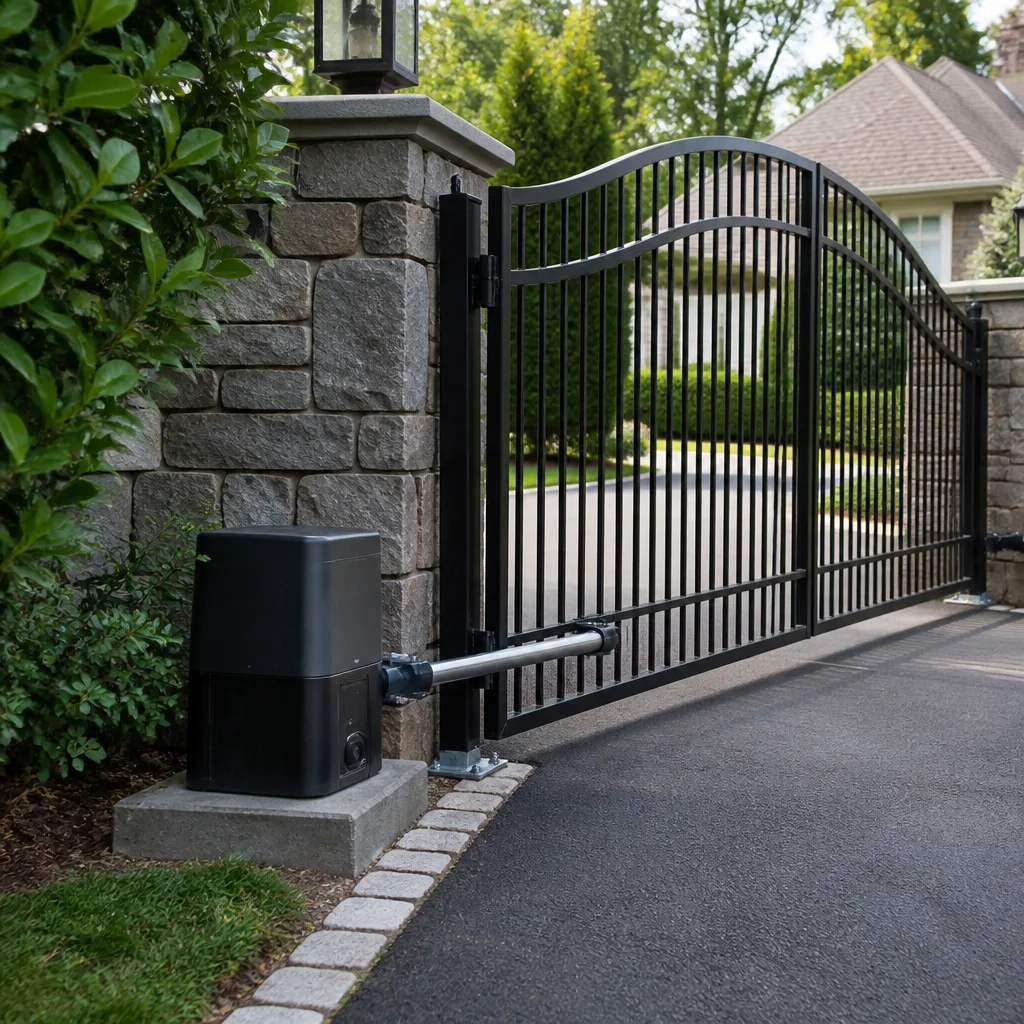
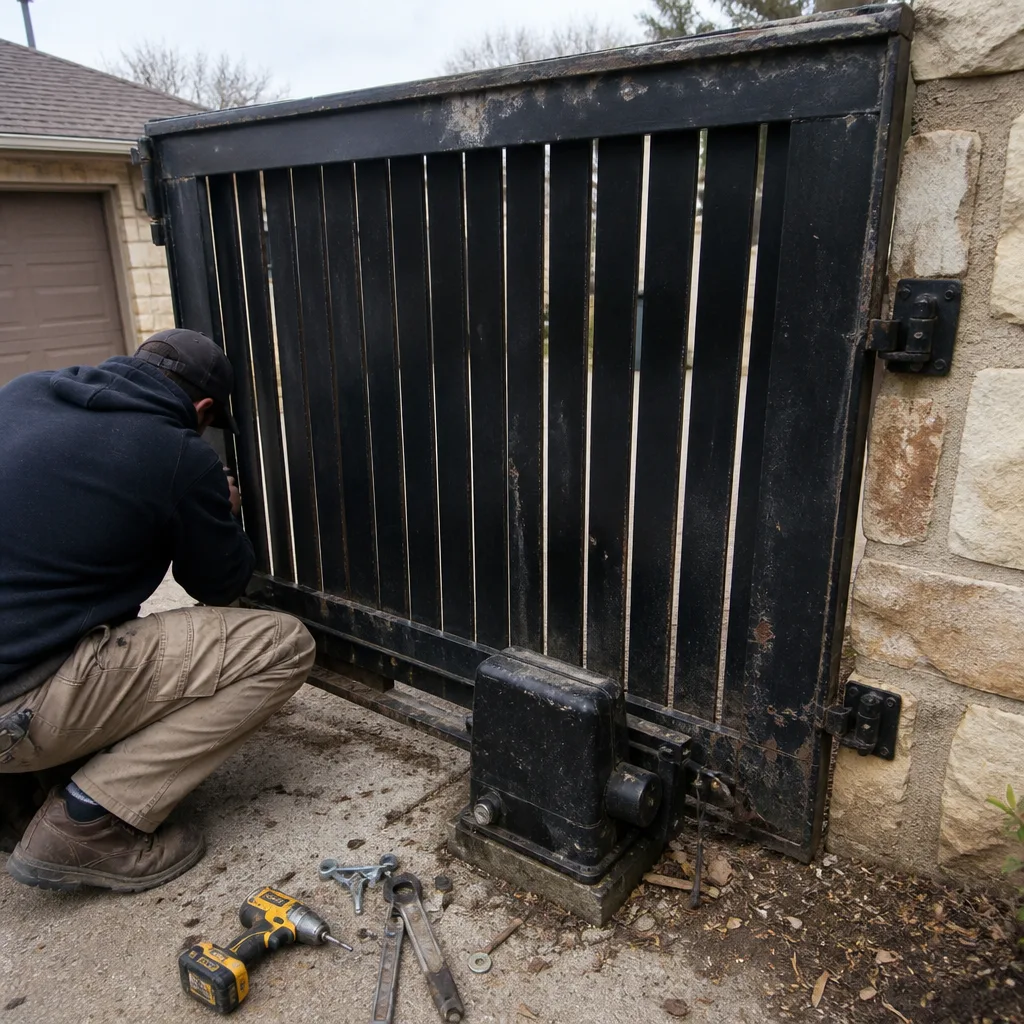 Before
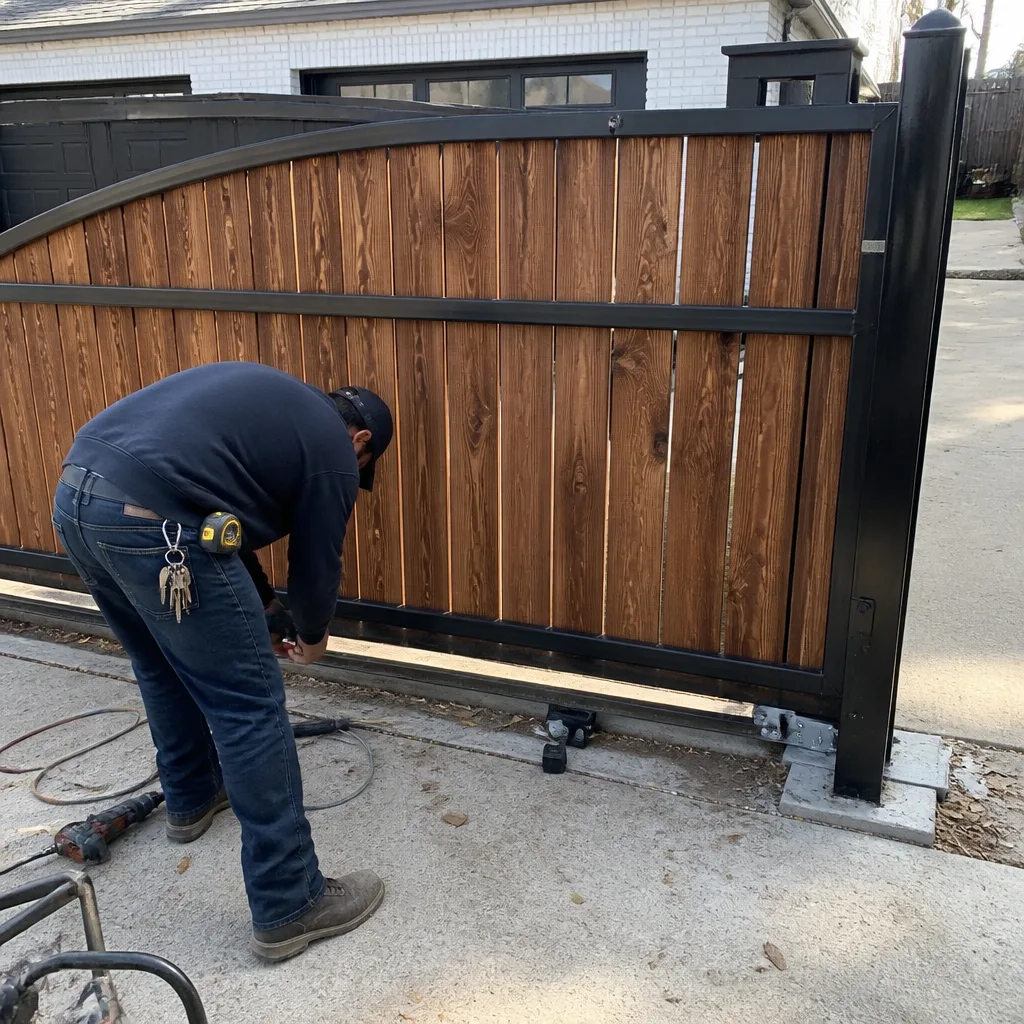 After
After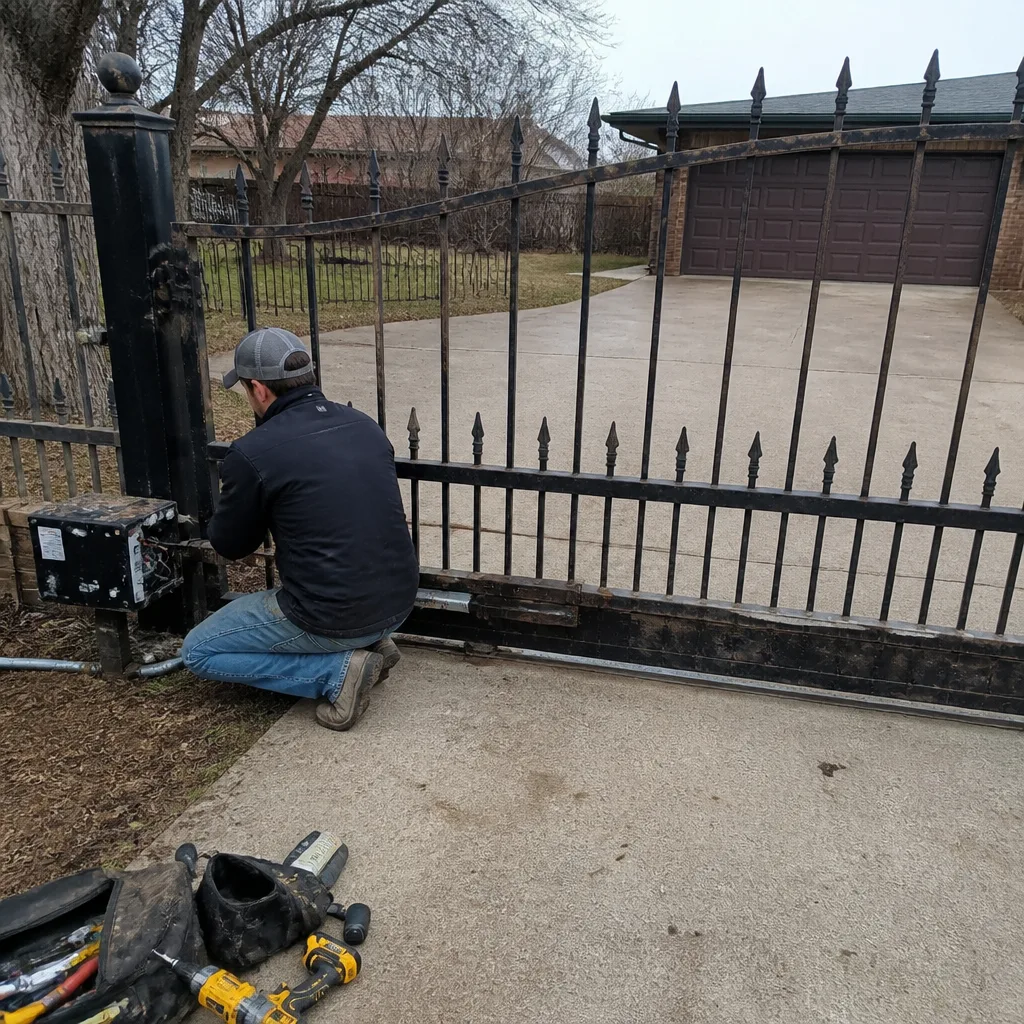 Before
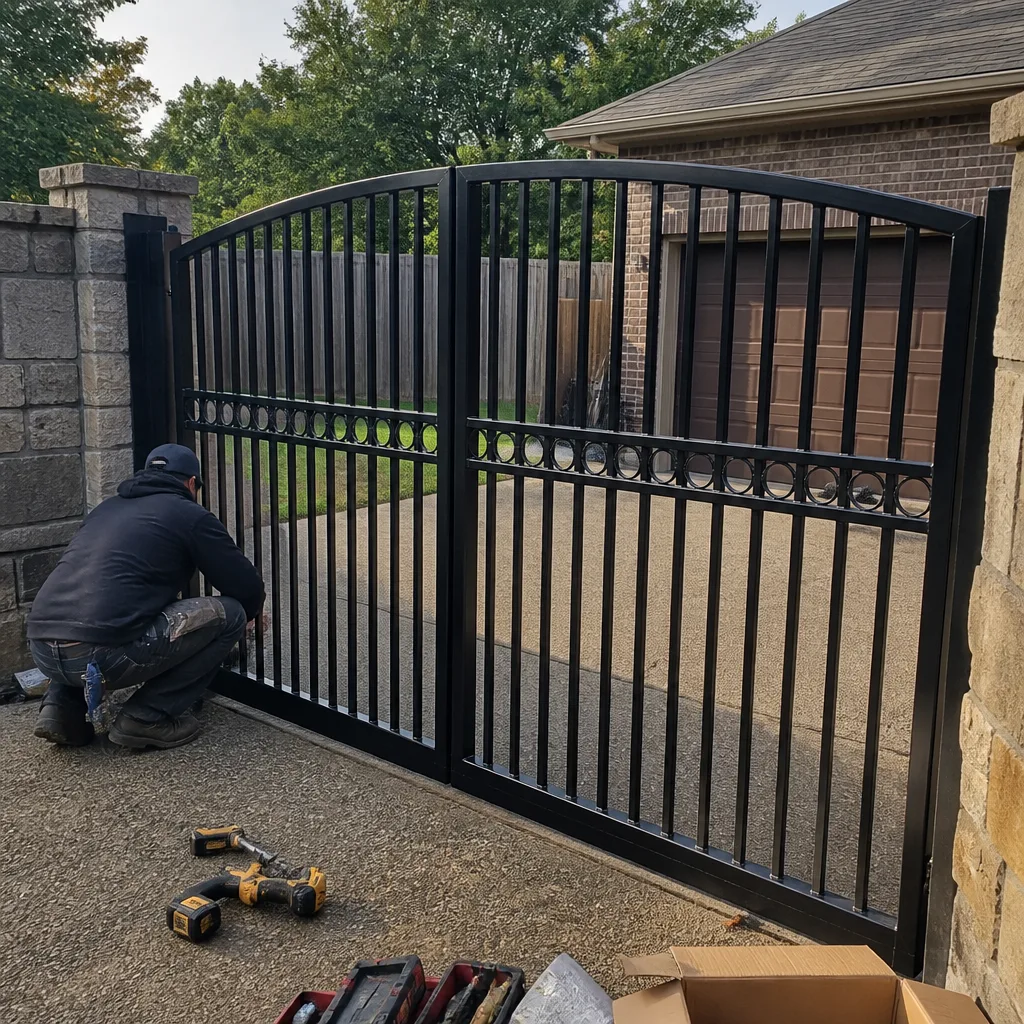 After
After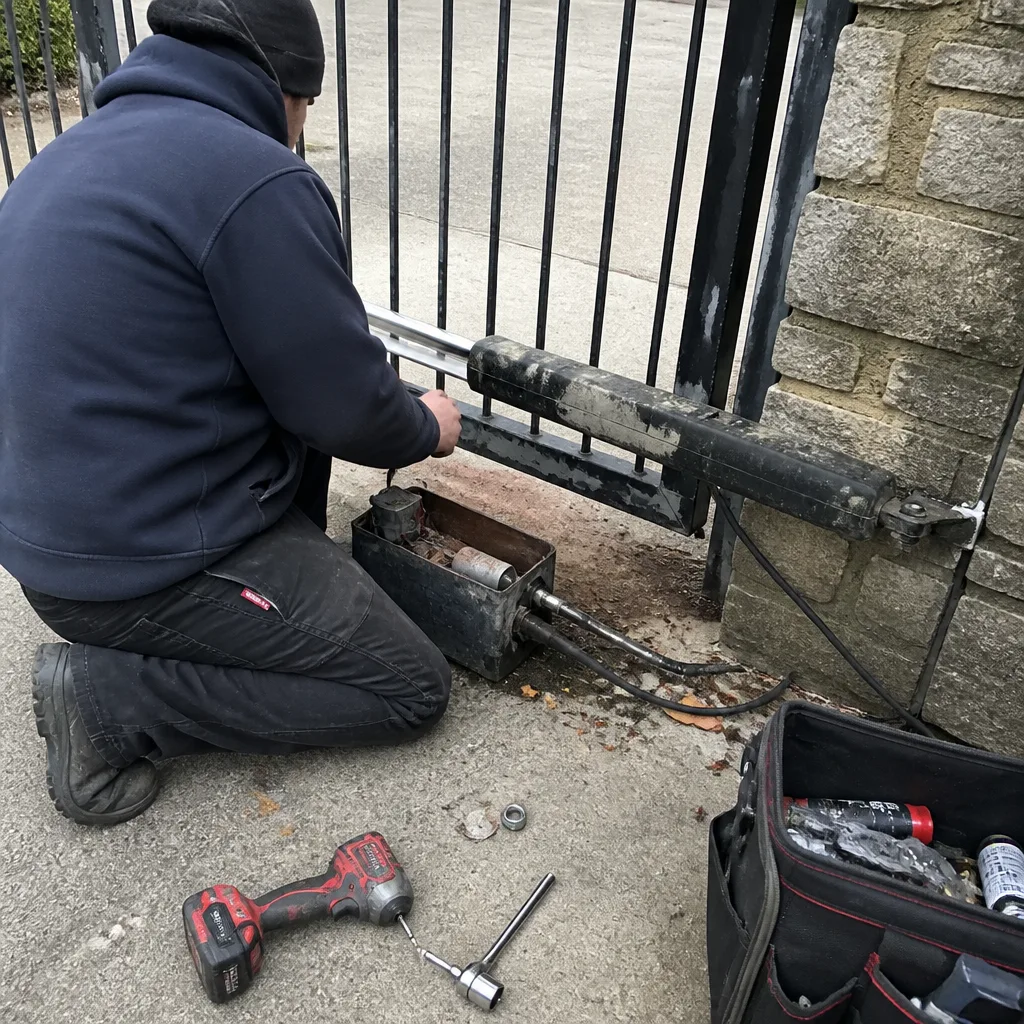 Before
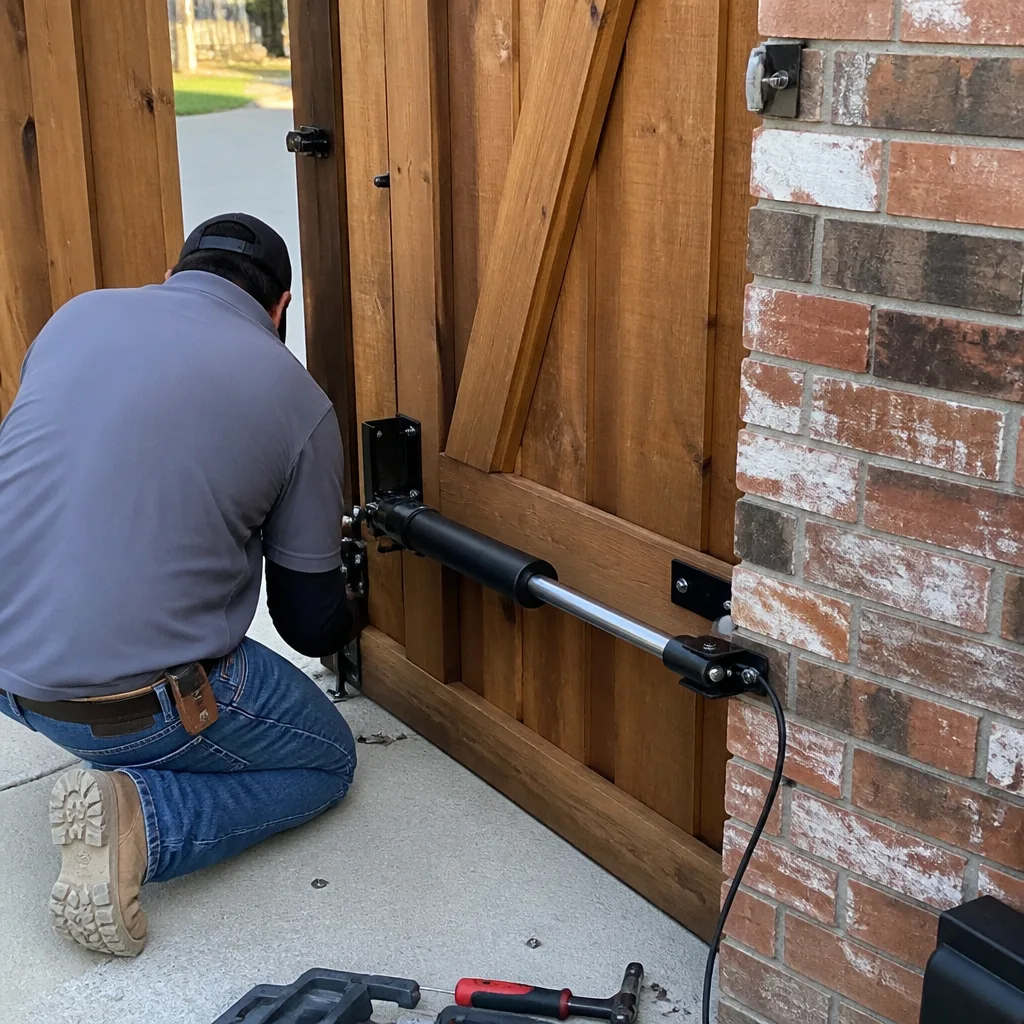 After
AfterSeasonal Gate Repair Care for North Richland Hills: Year-Round Homeowner’s Guide
Here’s something most gate care guides get wrong about North Richland Hills: we don’t have four seasons that matter. We have two punishing ones and two windows where the smart work gets done. The February 2021 ice storm didn’t break most gates in North Richland Hills by itself. It broke gates that were already running on worn rollers, stretched chains, and dry bearings that nobody touched in the fall. The ice just finished what neglect started. This guide walks you through the actual calendar that matters here: pre-summer prep, what to do before a freeze, fall repairs that save hundreds, spring post-inspection, and the seasonal lubricant swaps that keep a gate moving in Texas. If you read nothing else, read the Quick Answer below and the fall section. Those two will save you more money than anything else on this page.
Quick Answer
Seasonal gate care in North Richland Hills comes down to two prep windows: late October through mid-November (before the first freeze) and April through early May (before triple-digit heat). In the fall, replace worn rollers, tighten chains, and switch to a cold-weather lubricant so nothing seizes when the ice comes. In the spring, check your post bases for soil heave from winter rain, clean out gate tracks, and swap in a heat-rated lubricant so your operator isn’t fighting 100-degree metal. Those two windows prevent most emergency calls we see in January and August.
Table of Contents
- The North Richland Hills Gate Calendar
- Pre-Summer Checklist: Preparing Your Gate for DFW Heat
- Winter Freeze Prep: What to Do Before a North Texas Ice Storm
- Fall: The Critical Prep Window Most Homeowners Skip
- Spring Post-Inspection: Reading Your Gate After a Wet Winter
- Seasonal Lubricants: What to Swap and When in Texas
- Common Mistakes to Avoid
- When to Call a Professional
- Frequently Asked Questions
The North Richland Hills Gate Calendar
We’ve been running gate repair in North Richland Hills since 2001, and our call log tells a story that lines up with the weather report almost perfectly. Emergency calls spike twice a year: mid-January to early February when ice loads freeze hinges and snap operator arms, and late July to mid-August when circuit boards cook and capacitor banks give up in the heat. The repair work we do in between those spikes is different. It’s scheduled, it’s measured, and it costs a fraction of what the emergency version costs.
Here’s how the local calendar actually breaks down:
- October 15 to November 15: The fall prep window. This is the single most valuable six weeks of gate maintenance in North Richland Hills. Do the work now and you’ll coast through winter.
- December through February: Ice season. You’re not doing maintenance here. You’re responding. The goal of fall prep is to make this period boring.
- March: Thaw and inspection. The ground is wet, the soil has shifted, and your post bases will tell you what winter did to them.
- April through early May: Pre-summer prep. This is the second prep window, focused on heat survival rather than ice survival.
- June through September: Heat season. Operators run hot, metal expands, and anything that was marginal in spring fails in August.
One more thing worth saying plainly: a gate doesn’t care what the calendar says. It cares what the temperature and moisture do to steel, aluminum, chain, and circuit boards. The calendar above is just the North Richland Hills version of that.
Pre-Summer Checklist: Preparing Your Gate for DFW Heat
North Richland Hills summers regularly push 100 degrees, and your gate operator sits in the worst of it. The circuit board inside a typical swing or slide gate operator is rated to around 140 degrees Fahrenheit ambient. The problem is that ambient inside a metal operator housing on a 95-degree day with direct sun can hit 130 degrees before the motor even runs. Once the motor cycles, the internal temperature climbs past what most boards can handle. That’s why we see a wave of failed boards every July and August in gate motor repair calls around North Richland Hills. These failures aren’t random. They’re thermal.
Here’s the pre-summer checklist we run on gates across Tarrant County every April and May:
- Shade the operator if you can. A simple shade structure or relocating the operator to the shaded side of the post drops internal temperature by 15 to 25 degrees on a hot day. That’s the difference between a board that lasts 3 years and one that lasts 10. If you can’t shade it, at minimum make sure nothing is insulating it: no fence boards pressed against it, no ivy, no stacked firewood.
- Check ventilation openings. Operator housings have vent holes for a reason. We regularly find them clogged with dirt dauber nests in North Richland Hills. Clean them out with a small brush or compressed air. Do not plug them thinking you’re keeping bugs out; you’re keeping heat in.
- Clean and lubricate the track or rollers. A gate that moves with less resistance makes the motor work less. Less motor work equals less heat. This is where a 20-minute track cleaning pays for itself.
- Test the auto-reverse and photo eyes. Heat makes metal expand, and expanded metal can bow a gate leaf just enough to trip the photo eyes. If your gate starts reversing for no obvious reason in June, check for a bow before you start replacing parts.
- Swap to a heat-rated grease. We cover this in the lubricant section below, but the short version: the grease that worked in February will be paste in July.
We’ve fixed enough heat-failed boards in North Richland Hills to know that most of them didn’t need to die. They needed shade, ventilation, and a gate that wasn’t fighting its own track. Those three things are free or nearly free, and they extend operator life by years.
Winter Freeze Prep: What to Do Before a North Texas Ice Storm
Here’s a counterintuitive thing we learned from the 2021 freeze and every ice event since: the homeowners who propped their gates open to “keep them from freezing shut” did themselves more harm than good in a lot of cases. A swing gate propped open catches wind like a sail. When the ice arrives and wind loads hit, that leaf slams, torques the hinge post, and sometimes bends the operator arm or snaps the chain. The gate you were protecting becomes the damaged one.
Here’s what actually works before a North Texas ice storm in North Richland Hills:
- Leave the gate closed unless you expect a power outage that would strand you. A closed gate with good hinges and a healthy operator handles ice fine in most cases. The danger isn’t ice on the gate. It’s ice seizing worn parts that were already failing.
- If you must leave it open, pin it. Disconnect the operator and physically secure both leaves with a drop rod or chain and padlock. Do not rely on the operator to hold it open against wind.
- Clear ice from the track before operating a slide gate. A slide gate that tries to push through ice buildup can jump the track or bend the rack. Break the ice with a plastic shovel or a rubber mallet, never with the operator.
- Disconnect the operator and hand-cycle the gate after the storm before powering it up. If it doesn’t move freely by hand, fix the mechanical problem before you burn out the motor trying to force it.
- Check the weep holes on steel gate frames. Steel frame gates have small drainage holes at the bottom. If those are clogged in fall, water pools inside, freezes, and cracks the frame from the inside. We’ve seen this on older gates in neighborhoods like Home Town and Smithfield after hard freezes.
The pattern here is simple: ice doesn’t create new problems. It accelerates existing ones. A gate with good hinges, clean rollers, and a serviced operator survives ice season with nothing more than a few noisy open cycles. A gate that’s been ignored for two years gets found out in January.
Fall: The Critical Prep Window Most Homeowners Skip
If you only do one maintenance push per year in North Richland Hills, do it in October. That’s not a marketing line. It’s because the three most common freeze-related failures we repair in December and January are all small, cheap fixes in October and expensive ones after the ice. Here’s the math:
- Worn rollers: $8-$25 each in October. In January, a seized roller can bind the gate, strip the rack or bend a slide track, and you’re looking at $400-$600 in labor and parts.
- Dry chain: a $15 can of lubricant in October. In January, a stiff chain snaps under ice load, and replacement with tensioning runs $150-$300. If it takes out a sprocket, add another $100.
- Marginal circuit board: $200-$350 replaced proactively in October. If you wait for a freeze-cycle failure when the board is cycling constantly against ice resistance, you’ll pay $500-$800 with the emergency service call and likely a motor on top of it.
You’ll notice a pattern: winter doesn’t usually break healthy parts. It breaks parts that were already close to the edge. The fall window is your chance to replace them at retail price, on your schedule, before winter turns them into emergencies at emergency prices.
Fall is also when we handle most of our gate installation consultations in North Richland Hills. If your gate is rusted through at the bottom rail or the post is so far out of plumb that welding on a new hinge won’t hold, October is the time to plan a replacement. Rushing an installation between ice storms in January is how you end up with a gate set in half-frozen concrete.
Spring Post-Inspection: Reading Your Gate After a Wet Winter
North Richland Hills sits on clay-heavy soils that expand and contract hard with moisture. That’s a polite way of saying the ground moves. After a wet North Texas winter like we had in 2024, the soil around your gate posts has absorbed a lot of water, expanded, and then contracted as it dried out in March. That cycle shifts posts. Sometimes the shift is a quarter inch. Sometimes it’s enough to pull a footing loose and leave the gate hanging out of alignment.
Here’s how to read your soil and your posts every spring:
- Look for a gap between the concrete footing and the surrounding soil. A visible halo of separation around the post base after the ground dries is how heave announces itself. It means the soil expanded, lifted the footing, and settled back down unevenly.
- Sight the post for plumb. Stand back and line the post up with a fence line, a roof edge, or anything you know is straight. A post that was plumb in October and is leaning in March didn’t lean on its own. The soil moved it.
- Watch the gate’s latch strike in early spring. If the gate leaf is suddenly dragging on the ground or the latch doesn’t line up with the strike the way it did in December, the post or the leaf has moved. That misalignment is often a soil shift, not a hinge problem.
- Check the gap at the bottom of the gate leaf. An even gap that becomes tapered over the winter tells you one side of the gate structure has moved. On a swing gate, it’s usually the hinge post. On a slide gate, check the support wheels and the track itself.
If you catch post movement in the spring, the fix is usually straightforward: dig out around the footing, re-set the post in fresh concrete, and let it cure before adjusting the gate. If you catch it in August, the gate has been dragging, the operator has been straining, and you’ve probably worn through a wheel or a hinge by then. Spring inspection isn’t about what broke over the winter. It’s about catching what the soil moved before it becomes a summer failure.
Seasonal Lubricants: What to Swap and When in Texas
Texas is hard on lubricants because the same gate sees 20 degrees in January and 105 in July. The grease that flows fine in October turns to paste in a July gate track, and the lightweight spray that works in summer gets stiff enough to add real resistance in an ice storm. Here’s what we use and when we use it in North Richland Hills.
Winter (November through March): lightweight spray or cold-rated grease on chains, hinges, and roller bearings. We use a spray that stays fluid down to around -10 degrees. It won’t turn your chain into a stiff cable when the February ice hits. Apply it in November, then reapply after each hard freeze if the gate is seeing daily use.
Summer (April through October): graphite or heat-rated lithium grease on the same points. Graphite works on chains and roller bearings. Heat-rated lithium works on hinge pins and slide gate wheels. What you’re avoiding is the cheap general-purpose grease that liquifies and drips off in July, leaving the metal dry and grinding.
Never use WD-40 as a gate lubricant. It’s a water displacer and a cleaner. It strips what little lubricant is there and leaves the metal dry in a week. We see this constantly: homeowners who “lubed the gate in spring” with WD-40 and then wonder why the chain is grinding in July.
For operators with plastic gear sets, like most residential LiftMaster swing arm units and Linear slide operators, use the grease specified by the manufacturer or a white lithium grease. For chain drive slide gates, which are common in North Richland Hills, a sticky chain lube that clings through heat is better than a dry graphite that washes off in a spring thunderstorm. And for FAAC and BFT swing operators with metal worm gears, stick with the manufacturer’s recommended gear grease. Generic greases accelerate wear on those gearboxes and they’re not cheap to rebuild.
Common Mistakes to Avoid
- Propping a swing gate open before an ice storm. We covered this above, but it bears repeating: an open leaf catches wind like a sail, and the next thing that breaks is the hinge post or the operator arm. If you must leave it open, pin and secure both leaves.
- Using WD-40 as a lubricant. It’s the most common “maintenance” we undo. WD-40 strips grease and leaves metal dry. Use a real lubricant matched to the season.
- Ignoring a gate that’s “a little slow” in October. Slow movement means resistance. Resistance means heat. Heat means a board or a motor failure in August. A slow gate in fall is a warning, not a personality trait.
- Replacing the operator without checking the gate itself. A new opener on a gate with dry rollers and a sagging leaf will fail twice as fast as the one you just replaced. The gate moves first, the operator second. We’ve seen homeowners in North Richland Hills buy three operators in five years because nobody fixed the underlying mechanical drag.
- Waiting until the gate won’t open at all to call. Noise, chattering, slow starts, and intermittent photo-eye trips are early warnings. The emergency call costs more because it’s an emergency, and the damage is usually more extensive by then.
- Ignoring the weep holes on steel frames. Clogged weep holes trap water inside the gate frame. That water freezes in February and cracks the frame from the inside out. It’s a $5 problem that becomes a $1,500 gate replacement.
When to Call a Professional
Some gate work is homeowner-grade: lubricating a chain, cleaning out a track, checking photo eyes, and sighting a post for lean. Other work isn’t. Call a professional when the gate is off its track or the track is bent, when a swing gate is sagging at the hinge post, when the operator is making grinding or chattering sounds, when a circuit board shows burn marks or bulging capacitors, when the post has actually shifted and the footing is cracked, or any time the gate has been hit by a vehicle, even at low speed. A car bump that looks cosmetic can shear hinge pins and crack weld joints. We fix those before they fail at the worst possible moment.
Gatewood Fence & Gate offers free estimates in North Richland Hills. Call (817) 241-4067 and a live person answers, 24 hours a day. If you have a written estimate from another company, bring it by. Hal will give you a free second opinion. And if you’re just not sure whether something’s normal, call anyway. It’s easier to diagnose a noise over the phone than to repair a snapped chain at midnight.
Frequently Asked Questions
Twice a year, in October and April, for a typical residential gate in North Richland Hills. October service handles freeze prep: rollers, chains, hinges, board inspection, and cold-rated lubrication. April service handles heat prep: ventilation cleaning, heat-rated grease, photo-eye alignment, and post inspection after winter soil movement. Gates in daily high-cycle use, like gated driveways with multiple drivers, often need three visits a year. For most homes, twice is right. Call (817) 241-4067 and we’ll get you on the schedule.
Basic seasonal service, meaning lubrication, adjustment, and a full inspection on a typical swing or slide gate, typically runs $150 to $250 per visit in North Richland Hills. If the service turns up worn rollers, a dry chain, or a weak hinge, those individual repairs usually add $25 to $75 each. The fall repairs that keep you out of trouble, replacing rounded rollers and a stretched chain, often run $100 to $200 in total. Compare that to the $600 to $900 freeze-seized repair bill and the value is obvious. Season maintenance is the cheap option.
Yes. A live person answers our phone 24 hours a day, 7 days a week, and we schedule emergency gate repair in North Richland Hills the same day in most cases. If your gate is stuck open and your property is unsecured, or stuck closed and you can’t get a car out, call (817) 241-4067 immediately. We prioritize security issues like these. Every repair is quoted and agreed before any work starts, no trip charge inside Tarrant County, and $40 off any repair over $200.
We’re certified to service nine major gate brands, and we see a lot of LiftMaster swing operators, FAAC gear-driven swing units, BFT slide operators, and Linear openers across North Richland Hills. We stock common replacement parts for all of those, and we can order anything else. If your operator is more than 10 years old and you’re not sure what brand it is, we can identify it on site.
Yes, we handle gate motor and opener replacement in North Richland Hills and full gate installation, including operator mounting, power runs where needed, and safety edge installation. If your current operator is older and you’re deciding between repair and replacement, call (817) 241-4067 and we’ll walk through both options with honest recommendations. We repair more often than we replace, the repair-first approach is the whole point of our shop.
Yes. Every job Gatewood Fence & Gate completes in North Richland Hills carries a 90-Day Done Right Promise in writing. If it’s not done right, we make it right. One call brings Hal back, no runaround, no fine print, no “that’s not covered” conversation. The promise is printed on your invoice and signed. It’s been that way since 2001.
The Bottom Line
North Richland Hills gate care shouldn’t be a January or August emergency. It should be six weeks of focused work in October and another six in April. Fall prep replaces the worn parts that ice will seize: rollers, chains, dry boards. Spring prep checks what winter soil movement did to your posts and sets the gate up to survive another Texas summer without cooking an operator board. Everything in between is just watching, listening, and calling (817) 241-4067 when something sounds wrong. The Gatewood Fence & Gate shop is in North Richland Hills, the name is on the building, and Hal has been doing this since 2001. If you want a second opinion on a written estimate, or you’re just not sure what your gate needs, call. A live person answers, 24/7, and the estimate is free.
Written by Hal Gatewood, Owner at Gatewood Fence & Gate, serving North Richland Hills since 2001.