
Last updated August 26, 2026
Free on-site gate assessment - hinges, posts, and your LiftMaster or Nice gate operator checked before anything is quoted
The assessment is free and the quote is the invoice.
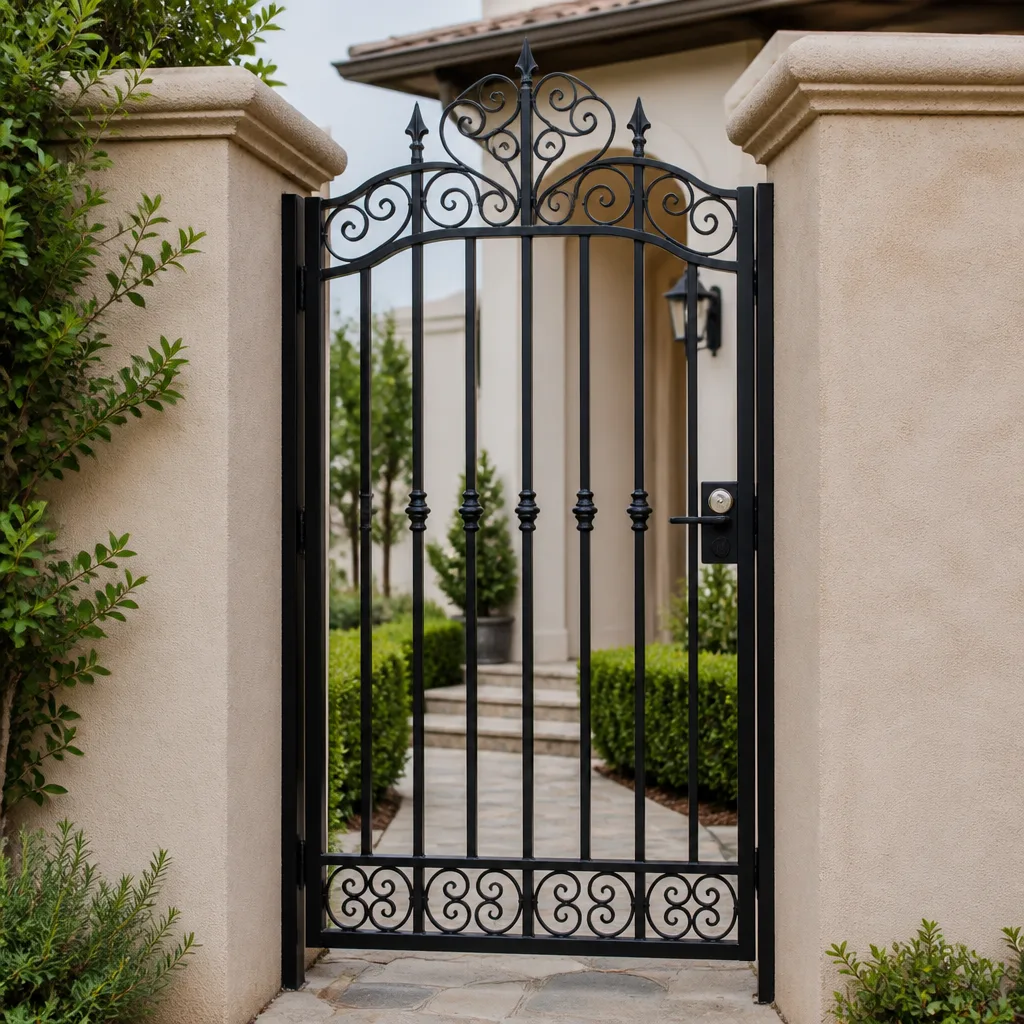
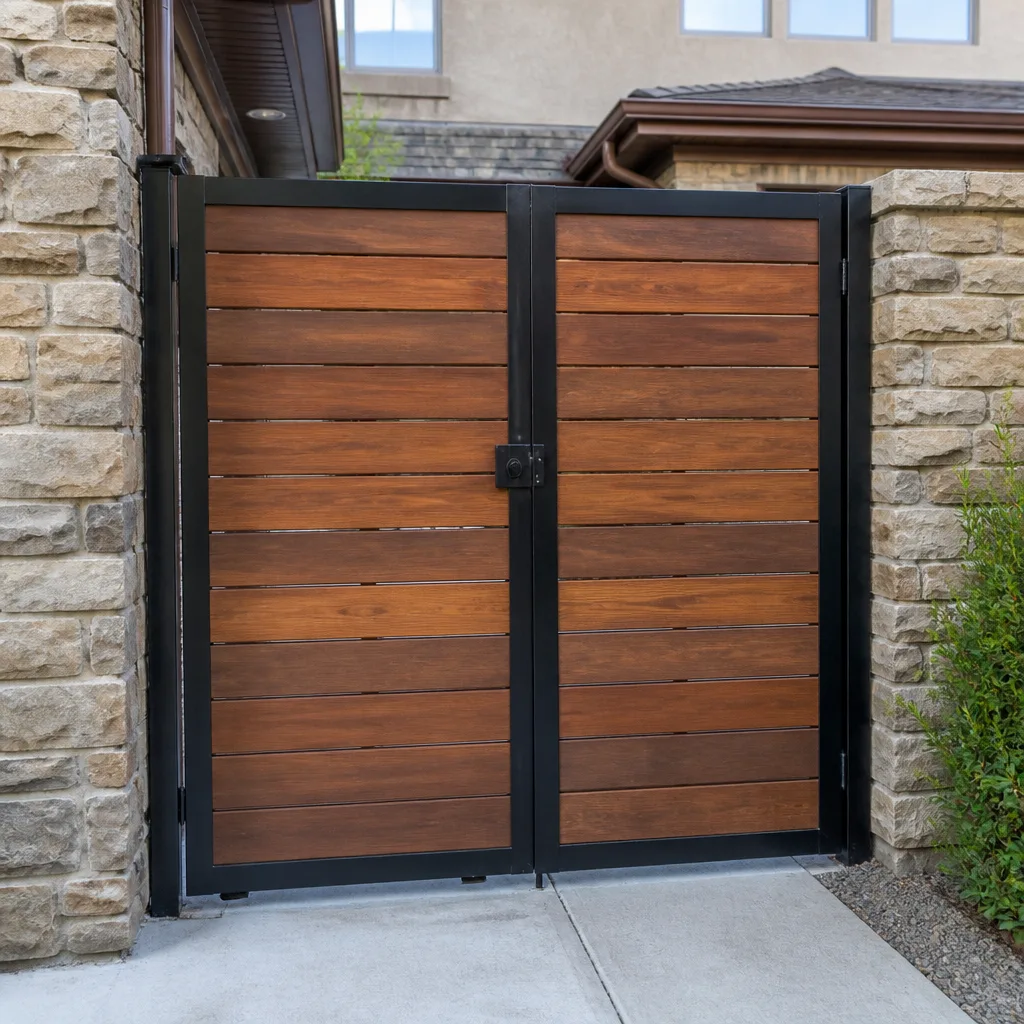
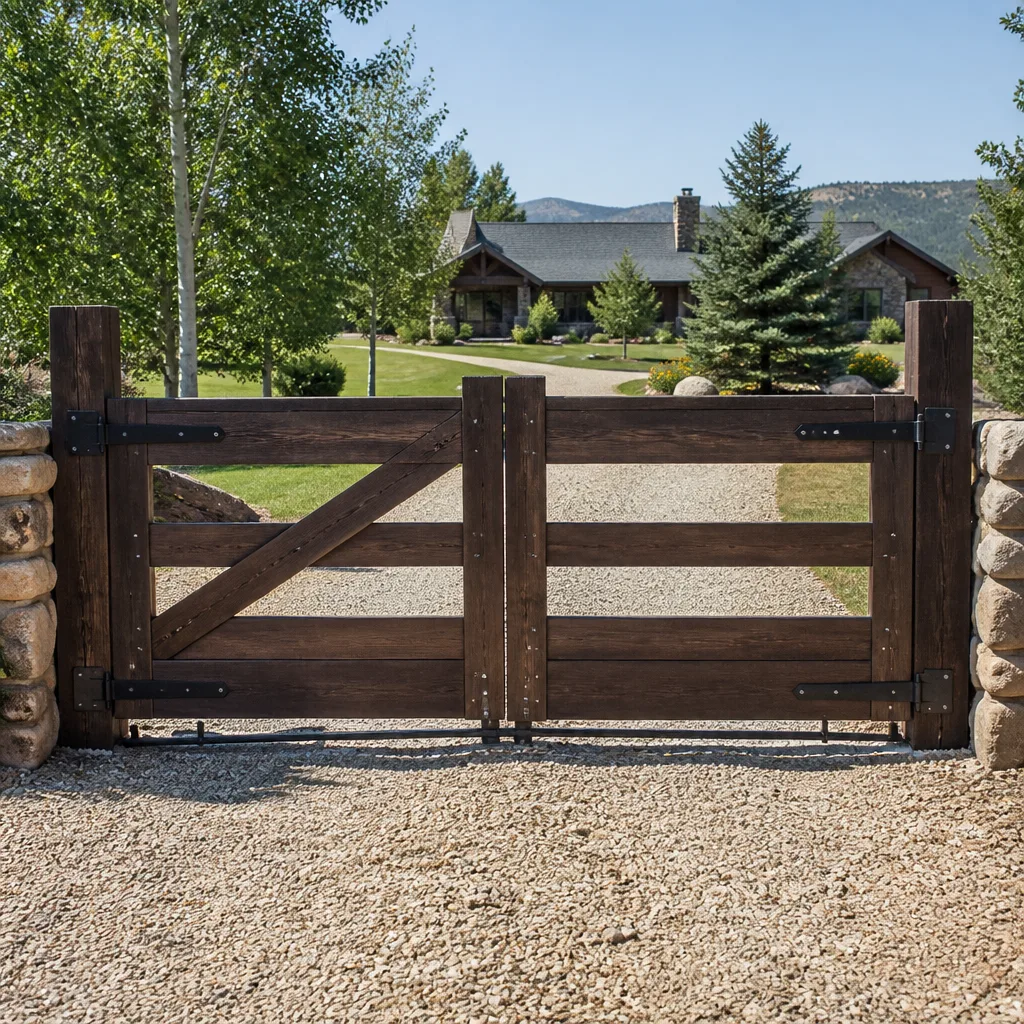
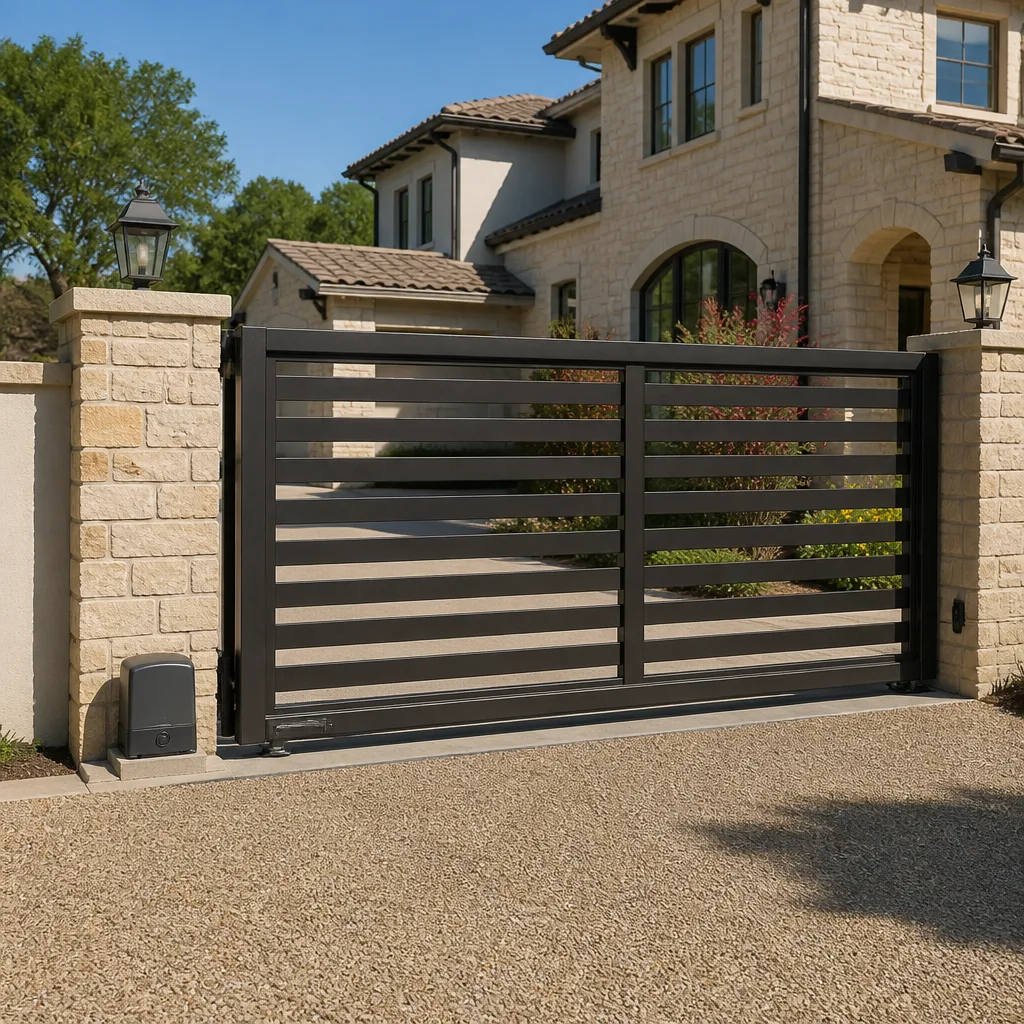
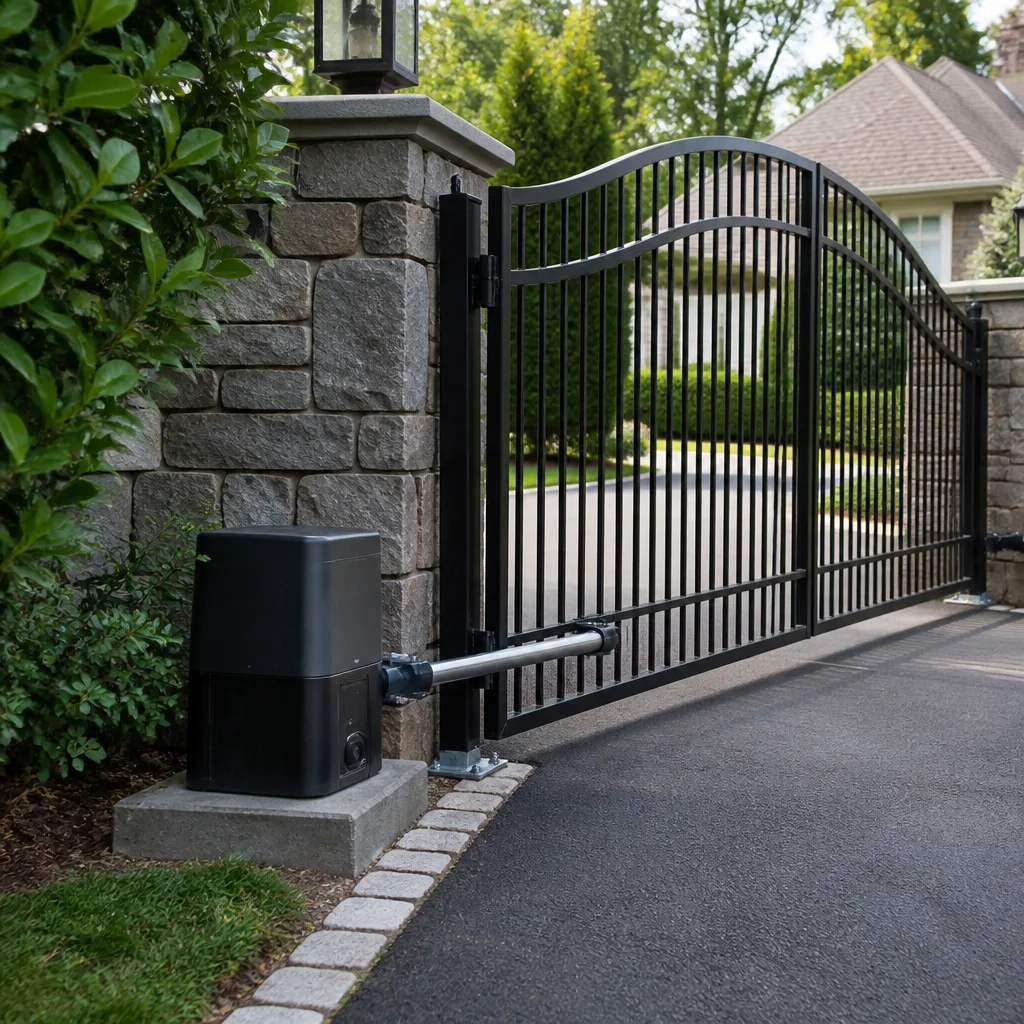
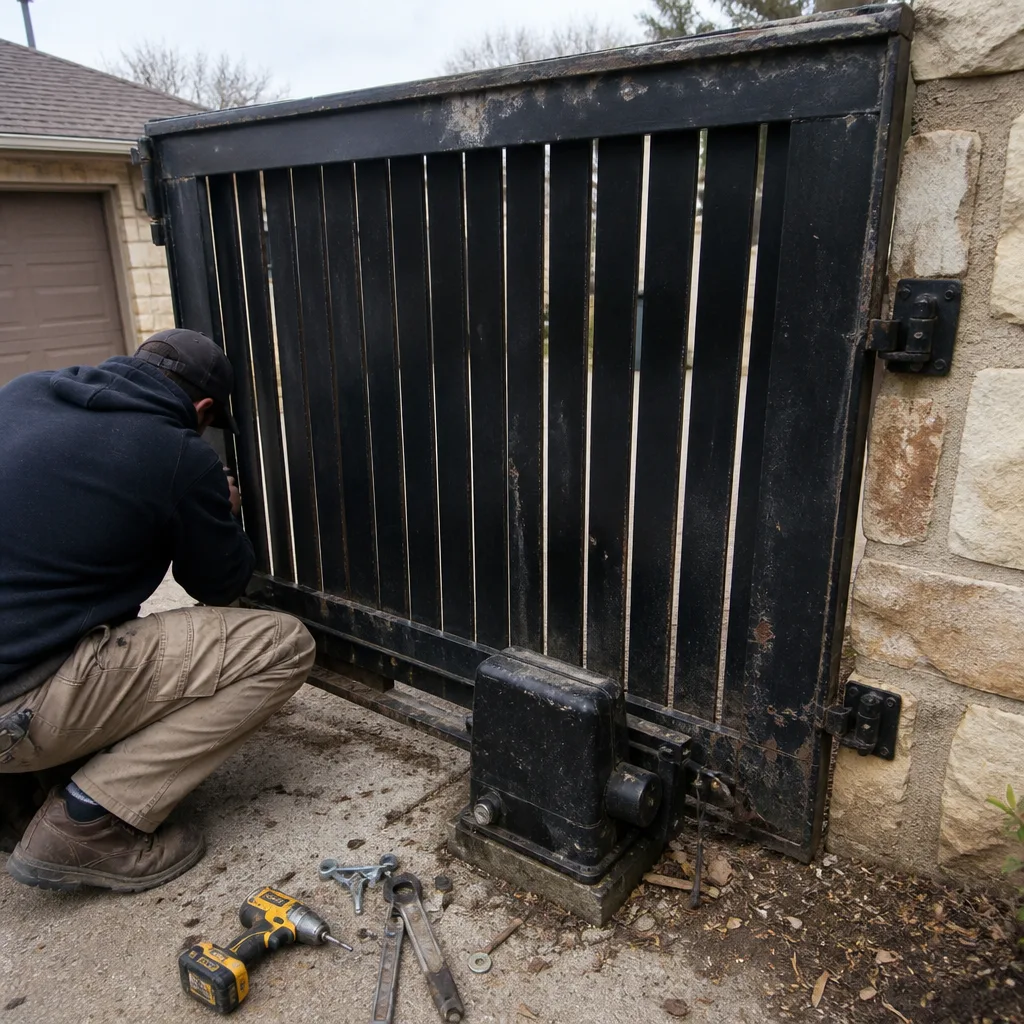 Before
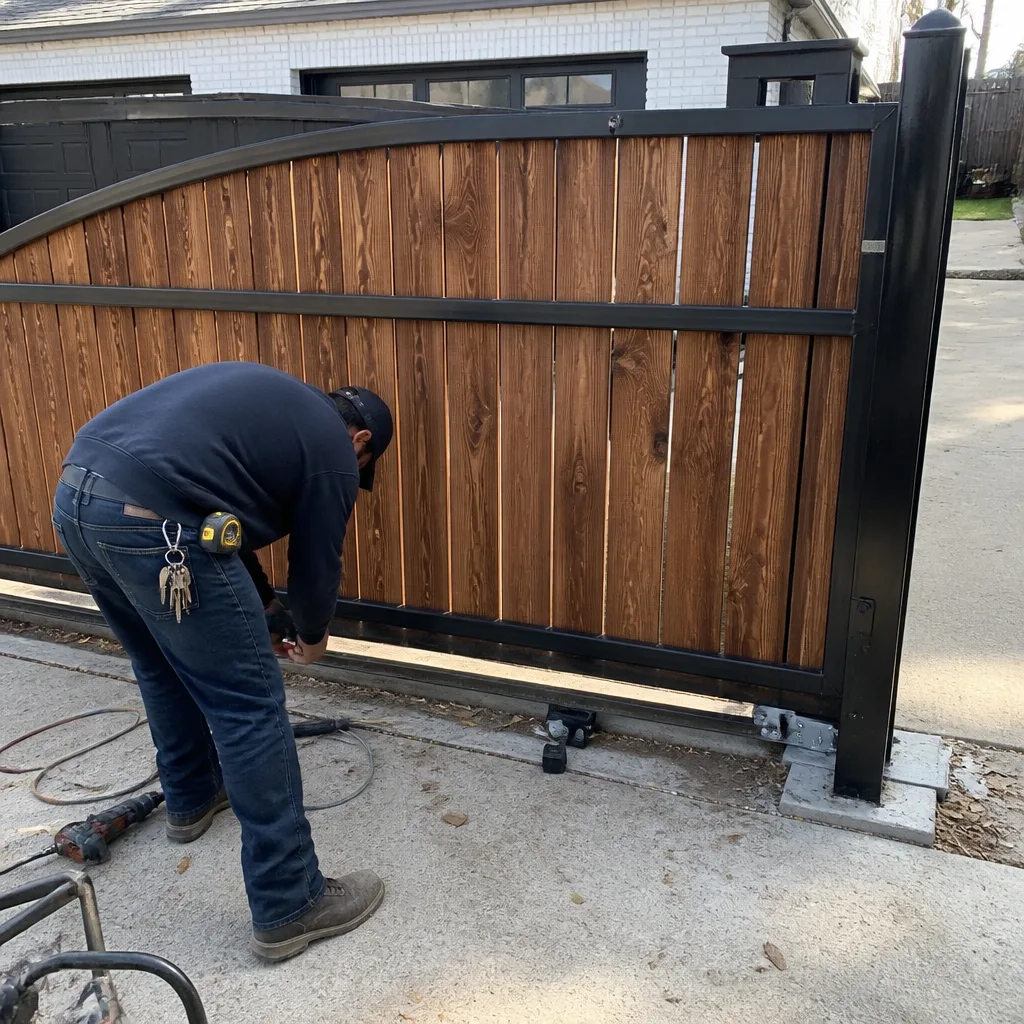 After
After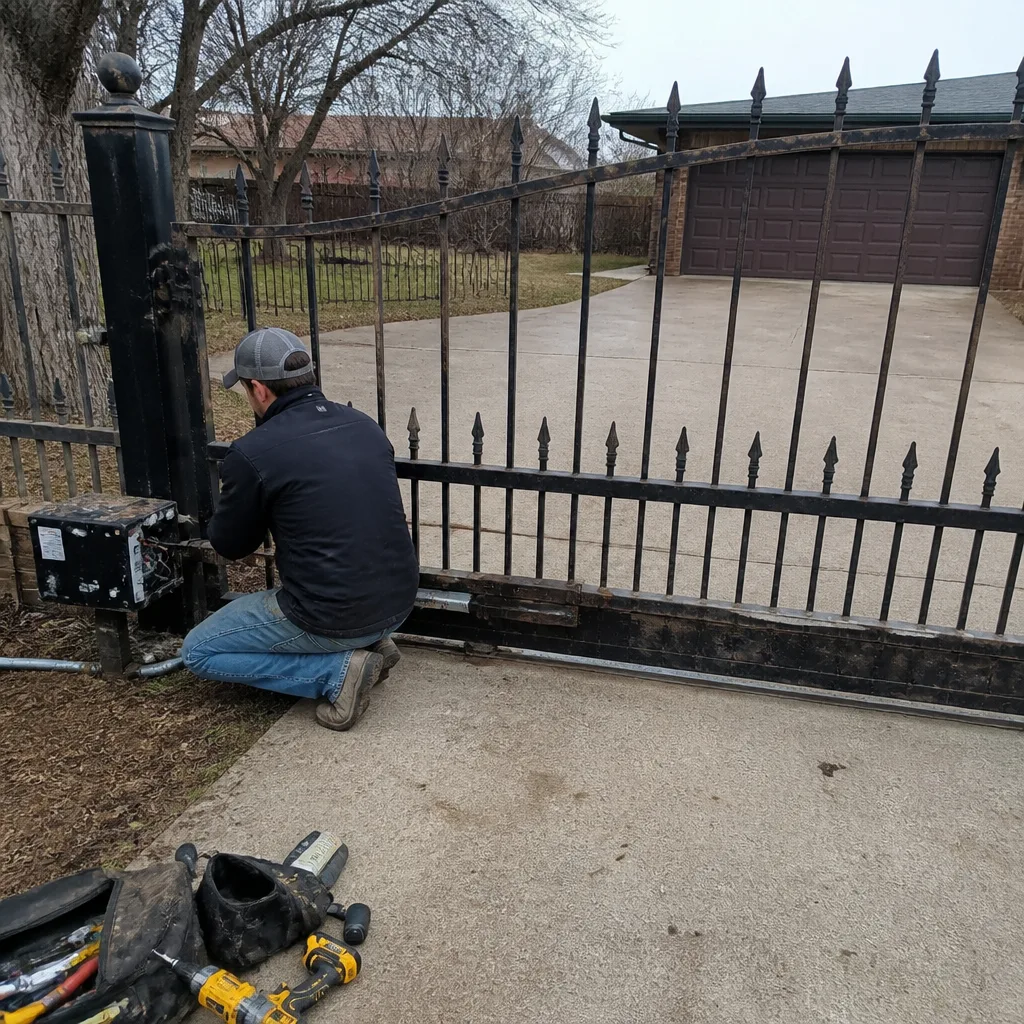 Before
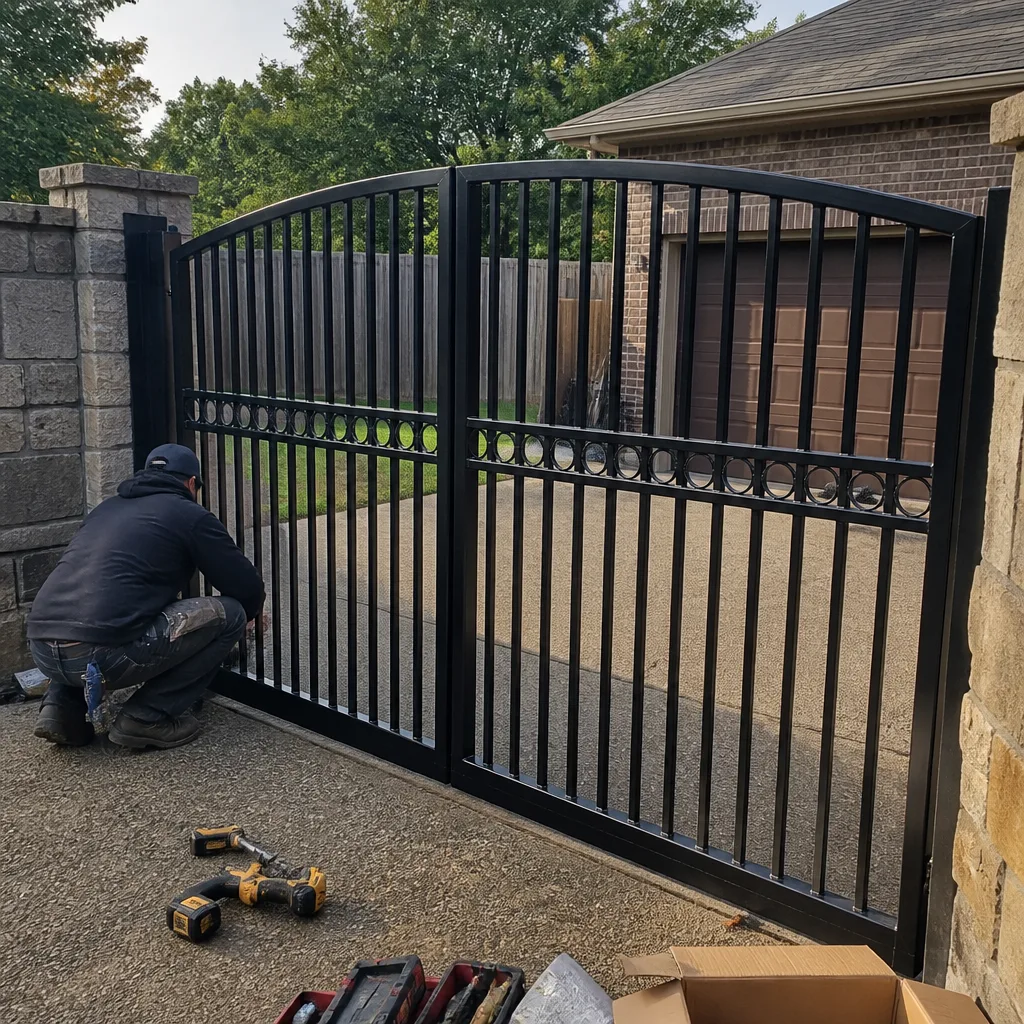 After
After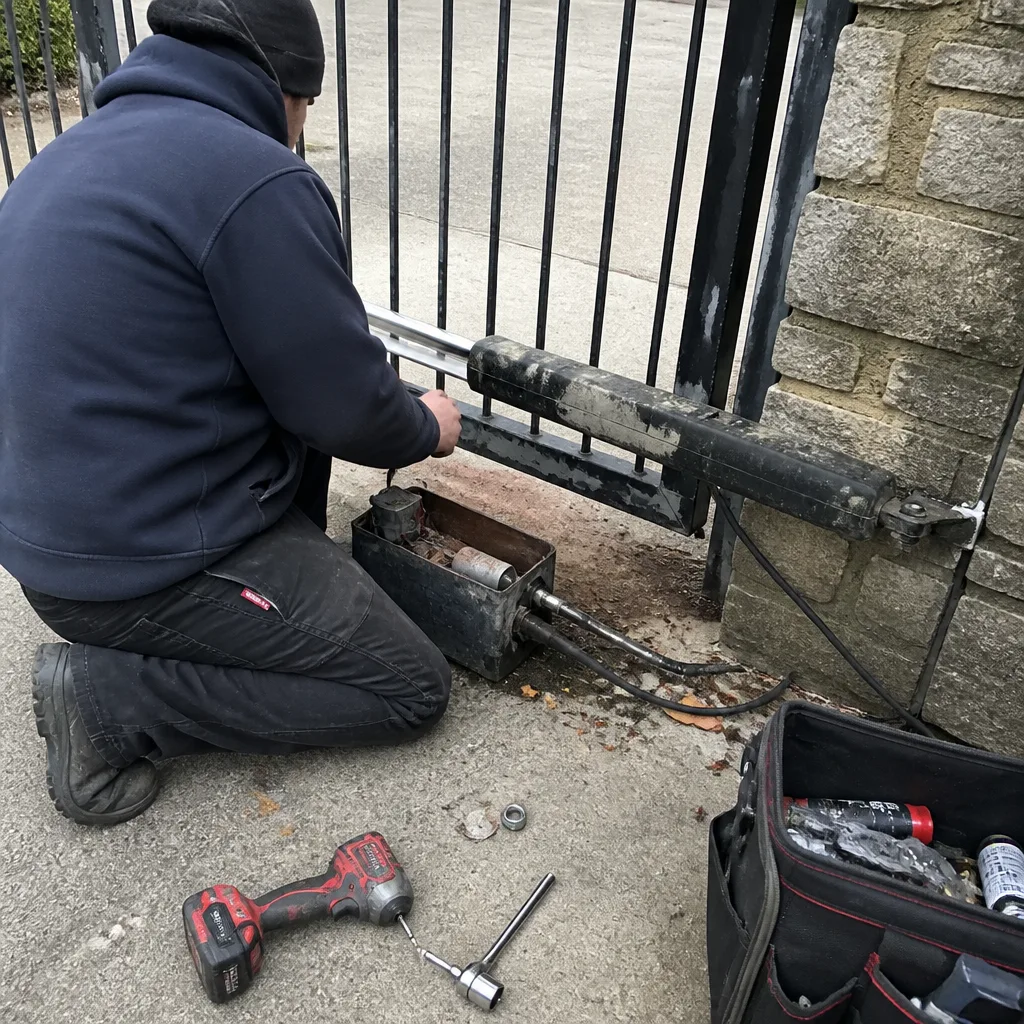 Before
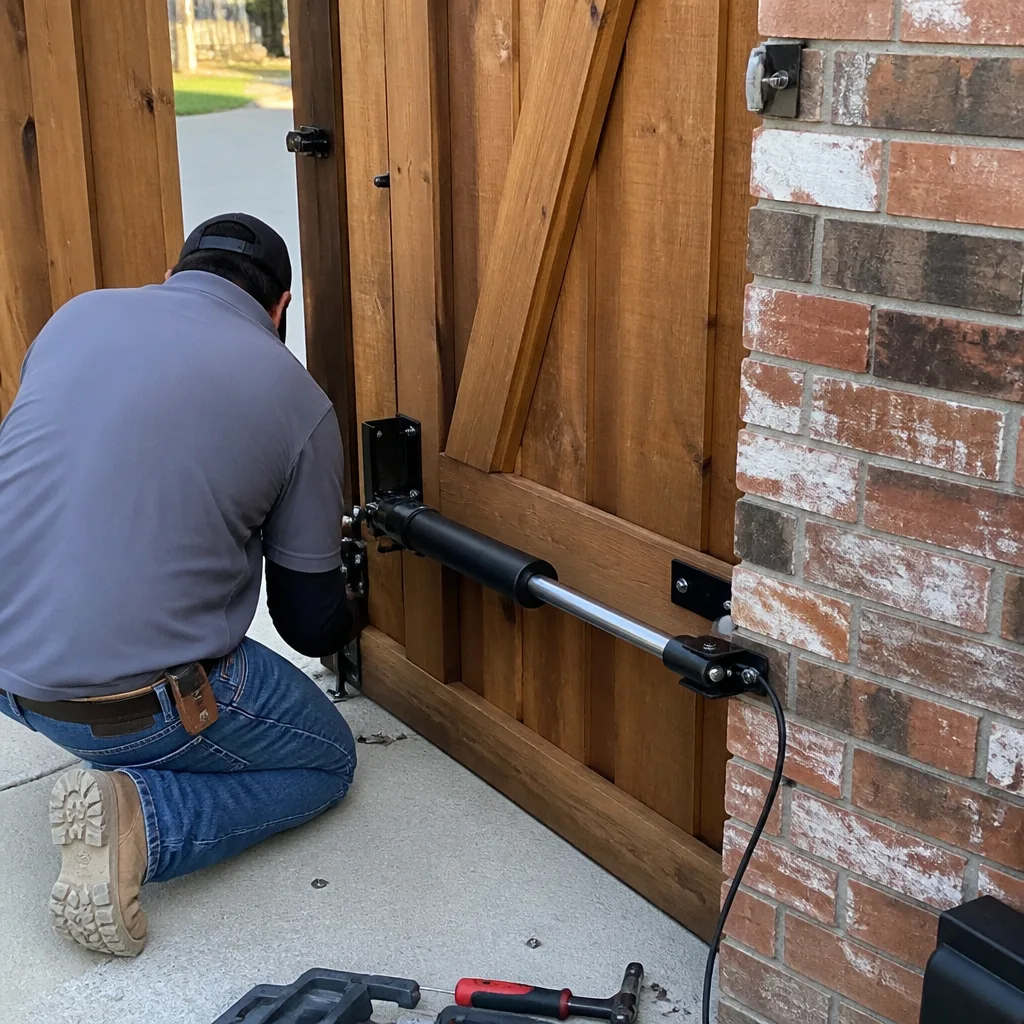 After
AfterGate Repair Warning Signs: A North Richland Hills Homeowner’s Reference Guide
When your driveway gate starts drifting open on its own without any wind, most people assume the latch is bad. Usually it’s not. It’s a settling post that’s changed the gate’s hang angle, and if you replace the latch without fixing the angle, the new latch fails in three months. That’s the thing about gates: they don’t quit without warning. They telegraph problems through sound, movement, and wear patterns for weeks before something actually breaks. This guide walks you through what each warning sign looks like, sounds like, and costs to address at each stage, written from the perspective of a gate repair shop in North Richland Hills that has seen every one of these failures on gates across Tarrant County.
Quick Answer
The most common gate repair warning signs in North Richland Hills are a gate that drags or scrapes, drifts open or closed on its own, makes grinding or squealing noises during operation, sags visibly at the free end, or has an opener that hesitates, reverses, or trips the breaker. Most of these start as small alignment or wear issues that cost $180 to $400 to fix if caught early, but ignored for six months they become post, panel, or operator failures that run $900 to $2,500 or more.
Table of Contents
- Sagging vs. Racking vs. Leaning: Three Different Problems, Three Different Fixes
- The Sound Guide: What Your Gate Is Telling You
- Operator Warning Signs That Aren’t Obvious
- How to Read the Wear Patterns on Rollers and Hinges
- The Cheap Fix Threshold: When Patching Costs More Than Fixing It Right
- How North Richland Hills Climate and Soil Affect Your Gate
- A Seasonal Gate Check You Can Do in Ten Minutes
- Common Mistakes to Avoid
- When to Call a Professional
- Frequently Asked Questions
- The Bottom Line
Sagging vs. Racking vs. Leaning: Three Different Problems, Three Different Fixes
Most homeowners describe any gate that isn’t square as “sagging.” But in our experience, there are three distinct failure modes, and they point to three different root causes. If you misdiagnose which one you have, you’ll spend money on the wrong repair and the gate will fail again.
Sagging is when the free end of the gate drops lower than the hinge side. The gate still swings, but it drags on the ground or scrapes the concrete at the latch post. A sagging gate almost always means one of two things: the hinge post has shifted in the ground, or the hinges themselves have worn and elongated. A gate sags in the hinge post, not in the middle, and that is where we start. On a steel gate in North Richland Hills, a sag of even half an inch at the free end means the hinge post has moved or the hinge pins are shot. Fixing this typically costs $180 to $400 when it’s caught early – we weld the hinge back square or shim and re-set the post. Ignore it for a year and the post movement accelerates, and now you’re looking at $800 to $1,200 to dig out and re-set the post in concrete.
Racking is different. Racking is when the gate panel itself goes out of square – the top rail is no longer parallel to the bottom rail, or the diagonal bracing has pulled loose. The gate may still hang at the right height, but the frame has twisted. Racking happens when something is pushing or pulling on the gate unevenly: a wheel on one side is bound up, a vehicle bumped the gate, or a wind gust caught a solid panel and torqued the frame. Racking is a frame problem, not a post problem. If you see a gap opening up at the welds where the diagonal brace meets the frame rail, that’s racking. The fix usually involves welding the frame back square and adding or re-welding the diagonal brace, typically $250 to $500 on site. On-site welding means the gate stays in your driveway, not hauled to a shop – a real Gate Repair in North Richland Hills shop does this in an afternoon.
Leaning is when the entire post – hinge post or latch post – tips out of vertical. The gate may actually look square to itself, but it’s hanging at an angle because the post is no longer plumb. A leaning post is the most serious of the three because it means the post’s footing is failing. North Richland Hills sits on expansive clay soil that swells when it rains and shrinks during the dry summer months. Posts set in undersized footers or without proper depth lean within a few seasons. A leaning post on a gate that still opens and closes is a $400 to $800 repair if you catch it now – we dig alongside the post, straighten it, and re-set it with additional concrete. A leaning post that has progressed to the point where the gate won’t close is a full post replacement at $900 to $1,500. The difference is simply when you call.
The Sound Guide: What Your Gate Is Telling You
Gates talk. Most of the time, a strange noise is the first signal you get, weeks or months before visible damage shows up. Here’s what each sound means, and which ones mean stop using the gate right now.
Grinding is almost always metal on metal with no lubrication, or a roller bearing that has seized. On a sliding gate, grinding from the track area usually means the roller bearings have failed and the wheel is now sliding instead of rolling. On a swing gate, grinding at the hinge means the hinge pin has worn through its bushing. A grinding gate that’s caught early is a $120 to $200 fix – new rollers or hinge bushings and lubrication. A grinding gate that’s ignored until the wheel carves a groove in the track or the hinge boss wears oval is a $500 to $900 fix. You can hear the difference: early grinding is intermittent and rhythmical; late grinding is constant and sounds like dragging a cinder block.
Clicking or popping during opener operation is usually the operator’s limit switches or the chain/belt drive skipping. On a gate that’s struggling to move – because the gate has sagged, the wheels are bound, or the hinges are tight – a popping sound often means the operator is hitting its internal clutch or force limit and releasing. That’s a safety mechanism doing its job. The problem isn’t the operator; it’s whatever is making the gate hard to move. Treat the operator as the symptom, not the disease. If you hear clicking or popping, stop using the gate and inspect what’s binding. Continuing to run the operator against a bound gate is how you turn a $300 hinge fix into a $1,400 operator replacement.
Squealing is usually a belt tension or pulley issue on a belt-drive operator, or a dry axle on a wheel. Squealing is the least alarming sound on this list – it’s fixable with a tension adjustment or lubrication in most cases, typically $100 to $150. But on a FAAC or BFT hydraulic operator, a high-pitched squeal can mean the pump is cavitating or low on fluid, and that’s a $350 to $600 service call with parts if it’s caught before the pump burns out.
Banging or slamming at the end of travel means the gate is hitting its stops too hard – the operator’s deceleration is misadjusted or the stops are missing entirely. Slamming cracks welds over time. On a Viking or Linear operator, adjusting the slow-down point is a quick fix, but if the gate has been slamming for months, expect to also weld cracks in the frame or replace a bent stop plate. A slamming gate is a $150 to $250 fix when it’s just an adjustment, and a $500 to $800 fix when the frame has already cracked.
One sound you should never hear: a gate that groans once, then goes silent while the operator keeps running. That’s a broken chain, belt, or drive shaft. Turn the operator off at the breaker and call a professional.
Operator Warning Signs That Aren’t Obvious
Most people notice when their gate stops opening entirely. But operators fail progressively, and the early signs are subtle. Here are the four we tell North Richland Hills homeowners to watch for:
1. The gate hesitates on close but opens fine. This is the one that gets missed the most. When a swing gate opens fine but pauses or labors on close, something is loading the operator unevenly. On a chain-drive or screw-drive operator, the close cycle uses a different part of the gear train, and wear shows up there first. On a hydraulic operator, the close direction may be fighting a binding hinge. A gate that hesitates on close is telling you the motor load is asymmetric, and that asymmetry is usually mechanical – not electrical. The fix is usually a hinge or wheel issue ($150 to $350), not an operator replacement. But if you ignore it, the motor overheats and fails, and that’s $900 to $1,600.
2. The gate reverses for no reason. Operators have an obstruction sensor or force detection. When a gate reverses without anything in the path, the sensor is usually detecting real resistance – because the gate is dragging, the wheels are worn, or the post has shifted. North Richland Hills clay soil settles after heavy spring rains, and that settlement can change the gate’s travel path enough to trigger reversal on a gate that was fine last season. Reversing is a diagnostic signal, not a nuisance. It’s the operator telling you the gate is working harder than it should.
3. The opener runs but the gate moves slowly. On an AC operator, if the gate is moving slower than it did last month, the capacitor is failing or the motor is overheating from excessive load. On a DC operator with battery backup, slow operation can mean the battery is aging and the motor is running on reduced voltage. In North Richland Hills, where summer temperatures regularly hit 100 degrees, operators in direct sun run hotter than the same unit would in shade. Heat accelerates capacitor failure. A slow gate is a $25 capacitor or a $150 battery – if you catch it before the motor burns out. After that, it’s an operator.
4. The breaker trips intermittently. An operator that trips the breaker once in a while, not every cycle, is usually drawing excessive current because the gate is binding or the operator is overheating. Check for physical binding first. If the gate moves freely by hand (after disengaging the operator), then the operator itself is the problem. Intermittent breaker trips are a warning that something is degrading. Do not keep resetting the breaker and running the gate – you’re feeding a fault that will eventually become a complete failure, possibly during a storm when you need the gate most.
We service operators from FAAC, BFT, Linear, Viking, and five other major brands – and the failure mode above is consistent across all of them. Operators die from load, heat, and neglect, in that order. The operator is rarely the first thing to fail. Something else fails first, and the operator dies trying to compensate. For more on how operators age and fail, see our guide to Gate Motor & Opener in North Richland Hills.
How to Read the Wear Patterns on Rollers and Hinges
Wear patterns tell a story. If you know what to look for, you can diagnose a gate problem without taking anything apart. Here’s what we look for when we walk up to a gate in North Richland Hills:
Flat spots on rollers. A wheel that has a flat spot on one side means the gate is not traveling parallel to its track, so the wheel is dragging sideways instead of rolling. Flat spots on the drive wheel of a sliding gate point to a misaligned track or a settled post at one end. Flat spots on multiple wheels point to a frame that’s racked. Catching flat spots early means replacing the wheels and aligning the track ($200 to $400). Ignoring them means the track itself gets grooved or the operator strains against the bind, and that’s $800 and up.
Uneven wear on hinge pins. A hinge pin that’s worn more on one side than the other tells you the gate is load-bearing unevenly. On a swing gate, the top hinge and bottom hinge should wear similarly. If the bottom hinge pin is worn flat and the top is fine, the gate is sagging – the bottom hinge is carrying weight it was never designed to carry. That’s the post settling. If the top hinge is worn more, the gate is being lifted or racked – usually from wind loads or a gate that was hung out of square from the start. Worn hinge pins are a $150 to $250 repair. The post movement that caused them is the real issue.
Shiny spots on the latch or receiver. A latch that shows polished, shiny metal on one edge means the latch is engaging off-center, which means the gate is no longer closing at the same height it was hung at. That’s sag, plain and simple. You can file the receiver or shim the latch, and it’ll work for a while. But the latch didn’t move – the gate did. Fix the panel without the post and you’ll fix it twice.
Grease that’s clumped or greasy track deposits mixed with metal dust. If you wipe the track and see metal dust in the grease, that’s bearing material from a wheel that’s eating itself. Metal dust means the bearing is disintegrating. Replace the wheel now, before the bearing seizes entirely and the wheel slides along the track, carving a groove. Wheel replacement is $150 to $300. A grooved track is $500 to $900 to replace.
The Cheap Fix Threshold: When Patching Costs More Than Fixing It Right
There’s a point in every gate’s decline where patching stops being cheaper. We call it the cheap fix threshold, and it’s the line between a $200 repair and a $900 repair. Here’s how to spot it before you cross it:
| Warning Sign | Still in Cheap Zone | Past the Threshold |
|---|---|---|
| Gate sags less than 1 inch | Hinge shim or re-weld: $180-$350 | Post re-set with concrete: $800-$1,200 |
| Roller is noisy or flat-spotted | Replace wheels, adjust track: $200-$400 | Track replacement and new gate frame section: $900-$1,500 |
| Operator hesitates or reverses | Free up binding hinges, adjust limits: $150-$350 | New operator after motor burnout: $1,200-$2,500 |
| Latch doesn’t catch, gate drifts | Realign gate square, replace latch: $200-$300 | New latch post after leaning post repair: $900-$1,500 |
| Welds cracking on frame corner | Re-weld corner on site, add bracing: $250-$450 | New gate panel fabricated and hung: $1,500-$3,000 |
The principle is simple: if the root cause is still reachable for a repair, fix it now. If the root cause has progressed to the point where the component has failed structurally, you’ve crossed the threshold and you’re paying replacement pricing. The threshold isn’t about calendar time – it’s about how much the component has moved or worn. A gate that sagged half an inch last week and hasn’t changed is still in the cheap zone. A gate that sagged half an inch last year and now drags a quarter-inch groove in the concrete has passed it.
Here’s the part most homeowners don’t realize: crossing the threshold usually costs three to five times more than staying on the cheap side of it. And the repair bill for the root cause is usually less than half of what you’d pay for the replacement you’re trying to avoid. A $300 hinge and alignment job beats a $1,200 post replacement every single time. That’s the math behind “fix it early.”
If you’re in North Richland Hills and you’re not sure which side of the threshold your gate is on, one phone call gets you a straight answer. We do free second opinions on any written estimate – bring us what another company quoted, and we’ll tell you if it’s fair, if there’s a cheaper repair that would last, or if you’re being sold a replacement you don’t need. That’s been our policy since 2001, and it’s saved a lot of homeowners from buying gates they didn’t need. No trip charge inside Tarrant County, which means North Richland Hills, Richland Hills, Haltom City, Watauga, Keller, and Colleyville.
How North Richland Hills Climate and Soil Affect Your Gate
Your gate doesn’t fail in a vacuum. The soil under it, the heat on it, and the storms that hit it all play a role, and North Richland Hills has its own set of conditions that shape how gates fail here.
The soil is the biggest factor. North Richland Hills sits on the Eagle Ford Shale formation with patches of expansive clay. That clay swells when it’s wet and shrinks when it’s dry, and it does it unevenly. A post on the north side of the driveway may get more drainage from the lawn while the south side bakes dry. That differential movement – one post heaving, the other settling – is a major cause of gate misalignment in every neighborhood we work: from the established streets around Smithfield to the newer subdivisions off Davis Boulevard. We see more post settlement in North Richland Hills in the spring, after heavy rain, than any other season. If your gate has worked fine all winter and suddenly drags in April, it’s probably the clay under the post, not the gate itself.
The heat is the second factor. North Richland Hills averages 95-degree days through the summer. Operators in direct sun, especially dark-colored units mounted on metal posts, can see surface temperatures above 140 degrees. That heat degrades capacitors, softens drive belts, and shortens battery life on DC operators. When we install or service a Gate Installation in North Richland Hills, we angle operators away from afternoon sun where possible and recommend battery boxes with ventilation. It’s a detail that adds years to an operator’s life in this climate.
The storms matter too. North Richland Hills gets the full spring storm season – straight-line winds, occasional hail, and the kind of gust fronts that catch a solid steel gate like a sail. A properly braced gate handles 60 mph gusts. A gate with a racked frame or loose diagonal brace doesn’t. After any storm with winds above 45 mph, walk the gate and check for new weld cracks at the corners and brace connections. Catching a crack after one storm is a $150 weld. Catching it after six storms is a full frame repair.
A Seasonal Gate Check You Can Do in Ten Minutes
Twice a year – spring and fall – walk your gate through these checks. For a complete seasonal checklist, see our Seasonal Gate Repair Care for North Richland Hills: Year-Round Homeowner’s Guide. The goal is to catch the warning signs in this guide before they cross the cheap fix threshold.
Spring Check (March – April, after the rainy season and before summer heat)
- Watch the gate move through a full cycle. Stand to the side, not in front. Look for hesitation, binding, or the gate changing speed mid-travel. A gate that speeds up or slows down without input is carrying a changing load – that’s a problem.
- Listen for any sound that wasn’t there last fall. Grinding, clicking, popping, squealing. Reference the sound guide above. If it’s grinding or popping, stop using the gate and call us.
- Check the free-end gap. When the gate is closed, the gap between the gate and the latch post should be even top to bottom. If it’s wider at the bottom, the gate is sagging. If it’s wider at the top, the gate is racking. If the whole post is out of plumb, it’s leaning.
- Inspect the welds. Walk both sides of the gate and look at every welded joint. Look for hairline cracks, especially where the diagonal brace meets the frame rails. A crack that’s visible now is cheaper to weld now than to let grow.
- Test the hinges. With the gate in the open position, lift the free end. There should be minimal play – an eighth of an inch or less. More than that means the hinge pins or bushings are worn.
Fall Check (October, before the winter and before the next rainy season)
- Re-check the gap and the hinges – the same two checks from spring. North Richland Hills clay shrinks in the summer drought, and posts can move in the dry season just as they do in the wet.
- Lubricate the moving parts. Hinge pins, roller bearings, and any pivot points get dry in the summer heat. A spray lube on the hinge pins and a dab of grease on zerk fittings is all it takes.
- Check the operator’s battery backup if it has one. Most DC operators with battery backup have a test button or a light that shows battery health. Batteries last 2 to 4 years in this climate. If yours is older, plan for replacement.
- Clear debris from the track if you have a sliding gate. Leaves, gravel, and grass clippings collect in the track and get ground into the rollers. A clean track wears slower.
- Run the gate through a storm simulation. Close the gate, put your hand on it, and push gently. A solid gate shouldn’t flex more than an inch. A gate that feels springy or spongy has frame issues.
If you run these checks twice a year and act on what you find, you’ll catch most gate problems in the cheap zone. The gates we see that fail catastrophically are almost always gates that haven’t been looked at in two or three years. A ten-minute check replaces a $1,500 surprise.
Common Mistakes to Avoid
- Replacing the latch instead of the root cause. The latch didn’t move – the gate did. Replacing a latch on a settled gate is a temporary patch that fails again in months. Align the gate first, then replace the latch if it’s actually worn.
- Tightening hinges to fix a sag. A sagging gate isn’t loose hinges – it’s a moved post. Cranking down on hinge bolts puts the load on the hinges and the fastener threads, neither of which is designed to carry the gate’s weight. It strips the threads and widens the failure.
- Adjusting the operator limits to compensate for a dragging gate. If the gate is dragging, adjusting the operator’s limit switches so it “closes all the way” means the operator is now fighting the mechanical problem every cycle. That’s how you burn out a motor that was working fine.
- Using WD-40 on gate hinges. WD-40 is a penetrant, not a lubricant. It frees up stuck parts and then evaporates, leaving the metal drier than before. Use lithium grease or a proper bearing lube on gate hinges and rollers.
- Ignoring a small crack in a weld. Weld cracks propagate. The crack you see this month is the crack that’s half an inch longer next month. A $150 weld repair today beats a full frame replacement in a year. This is especially true on North Richland Hills gates with solid steel panels, which catch wind and flex at the corners.
- Running the gate on manual override without fixing the issue. Disengaging the operator and opening the gate by hand keeps the driveway usable, but every manual cycle with a binding hinge or dragging wheel is doing cumulative damage. Use manual override to get the gate open, then fix the mechanical problem.
- Waiting until the gate fails completely to call. The week before Christmas, the night before a trip, the morning of a storm – gates fail at the worst times, and the worst time is exactly when you don’t want to be paying emergency rates. Fix warning signs on your schedule, not on the gate’s schedule.
When to Call a Professional
Some gate issues are fixable by a handy homeowner. Others aren’t – and trying to fix them yourself makes the eventual repair more expensive. If you’re not sure how to vet a contractor, read our How to Hire a Gate Repair Contractor in North Richland Hills: A Step-by-Step Guide. Call a professional when: the gate is grinding or popping during operation; the post is visibly leaning; there are cracks in the welds; the gate has sagged more than an inch; the operator trips the breaker or reverses without obstruction; or the gate weighs more than you can safely support on your own. A steel gate panel can weigh 400 to 900 pounds, and the springs, cables, and moving parts under tension can cause serious injury if released wrong. Do not attempt to remove a gate panel, re-set a post, or disassemble an operator yourself unless you’re experienced with the equipment. Gatewood Fence & Gate offers free estimates in North Richland Hills, and we’ll tell you honestly whether the job is worth hiring out or whether you can safely handle it yourself. Call (817) 241-4067.
Frequently Asked Questions
Gate repair in North Richland Hills typically falls between $180 and $800 for common issues like hinge replacement, roller replacement, weld repair, and alignment work. Post replacements run $900 to $1,500. Full gate replacements run $1,500 to $3,000. Operator replacements run $1,200 to $2,500. These are the real ranges we quote and honor – every price is quoted and agreed before work starts, so the invoice matches the estimate. For more guides & resources on gate maintenance and repair, visit our blog. Call (817) 241-4067 for an exact price on your specific gate.
A gate that drifts open usually means the gate’s hang angle has changed – the hinge post has settled or the hinges have worn, and gravity is pulling the gate toward the low side. It’s rarely the latch. Realigning the gate costs $180 to $400 when caught early, before the post needs full re-setting.
For most repair work, yes – we keep common parts stocked and can often be out the same day or next day for hinge, roller, latch, and weld repairs. Post re-sets and operator replacements depend on parts availability, and we’ll give you a clear timeline when we quote. Call (817) 241-4067 and a live person answers – no voicemail, no call center.
Every repair job carries the 90-Day Done Right Promise in writing. If something we fixed fails within 90 days, one call brings us back and we make it right – no runaround, no arguing. It’s Hal Gatewood’s name on the invoice, and he’s been standing behind gate work in North Richland Hills since 2001.
Yes – we’re certified to service and install nine major brands including LiftMaster, BFT, Linear, Viking, FAAC, Ghost Controls, DoorKing, Elite, and Mighty Mule. If your operator shows a brand we don’t stock, we’ll tell you honestly whether repair is practical or whether replacement makes more sense.
Seniors and veterans receive a permanent 10% discount on all repair and installation work, no coupon needed and no expiration. On top of that, we offer $40 off any repair over $200, and there’s no trip charge inside Tarrant County. The price is quoted and agreed before work starts, every time.
The Bottom Line
Gates give you warnings. A sag here, a sound there, a hesitation on close – these are the gate’s way of telling you the problem while it’s still small and affordable. The homeowners who pay the least for gate repair in North Richland Hills are the ones who address warning signs in the $180 to $400 range instead of waiting for the $900 to $2,500 failure. Watch for the signs in this guide, run the seasonal checks, and when you’re not sure what you’re looking at, one call to a local shop that’s been fixing gates in your neighborhood since 2001 gets you a straight answer. That’s Hal Gatewood, at Gatewood Fence & Gate home. The shop is local, the number is (817) 241-4067, and a live person answers around the clock. Show me the gate closing on its own and I’ll show you where it’s failing – and I’ll tell you honestly what it costs to fix it right.
Written by Hal Gatewood, Owner at Gatewood Fence & Gate, serving North Richland Hills since 2001.